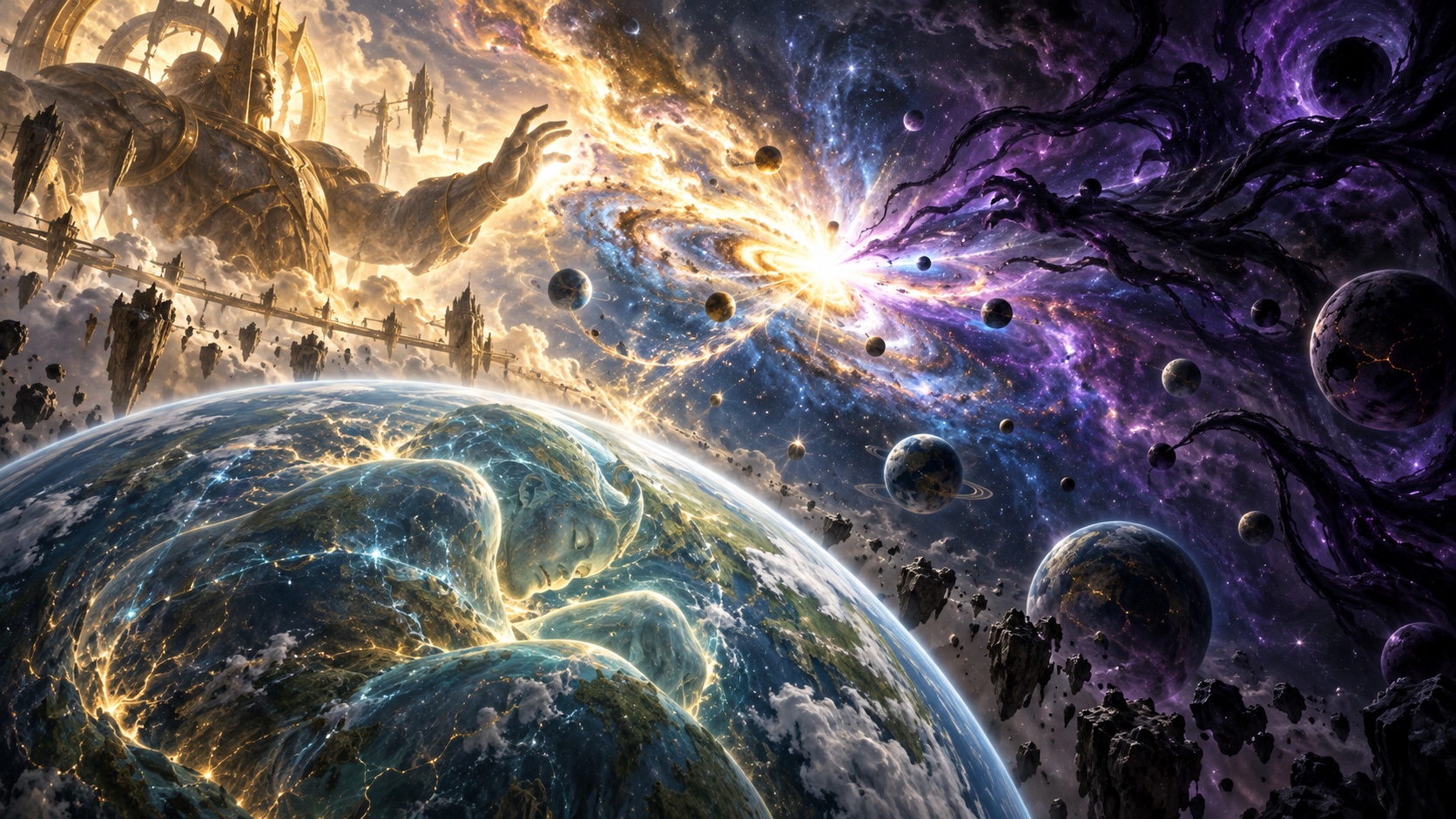
Warcraft’s oldest war did not begin with orcs, humans or even the Burning Legion. It began as a struggle over what reality should become. Light sought possibility through a single perfect path; the Void saw every path at once and tried to make its darkest outcomes real. Between them appeared a physical universe filled with mortal life, demons and sleeping world-souls. The greatest of those souls would become the reason nearly every cosmic power turned toward Azeroth.
Its clearest account comes from Chronicle Volume 1. Later stories added other viewpoints and established that Chronicle largely reflects the titans’ understanding, so its sequence is essential even where its explanations remain debatable.
When Light met the Void
In Chronicle’s account, the earliest existence was an endless sea of Light. Its energies rose and fell, leaving cold pockets where Light was absent. From that absence came the Void. The two forces could not merge. Their collisions produced violent explosions that created the physical universe—the Great Dark Beyond—and unstable seams leading to the Twisting Nether.
The Great Dark is the realm of stars, planets and ordinary matter. The Nether is a parallel realm of chaotic magic where demons take form. Light and Void are not simply good and evil: Light believes in one true future, while Void perceives countless futures and treats all as possible. Mortals live between those certainties.
Worlds that dream of becoming gods
Among the planets formed in the Great Dark, a rare few carried luminous spirits within their cores. These world-souls slept for ages, absorbing the elemental energies of their worlds until they could awaken as titans: living beings of colossal scale aligned with Order.
Aman’Thul was the first known titan to awaken. He searched for others and formed the Pantheon with Eonar, Norgannon, Khaz’goroth, Golganneth and later Aggramar. They did not create the universe: they travelled through it, seeking sleeping kin, calming elemental chaos and leaving titan-forged keepers to continue their work.
The champion and the demons
Demons born from the Twisting Nether already haunted the young universe. The Pantheon appointed Sargeras to stop them. With Aggramar as lieutenant, he destroyed their armies and imprisoned their spirits in Mardum, a vast supernatural cage.
For ages Sargeras was not Warcraft’s devil but its guardian. His fall began as every victory proved temporary. The decisive shock came from a different enemy: the Void Lords.
Unable to fully enter physical reality, these beings hurled parasitic Old Gods across the cosmos. Most landed blindly. Their purpose was to burrow into planets until one found a sleeping world-soul, corrupt it before awakening and create a dark titan through which the Void could manifest.
The world Sargeras chose to kill
Sargeras found a planet already smothered by Old Gods. Beneath them slept a world-soul whose corruption appeared nearly complete. According to Chronicle, dreadlords living there explained the Void Lords’ design. Sargeras saw a future in which an awakened dark titan could consume creation—and answered with immediate annihilation.
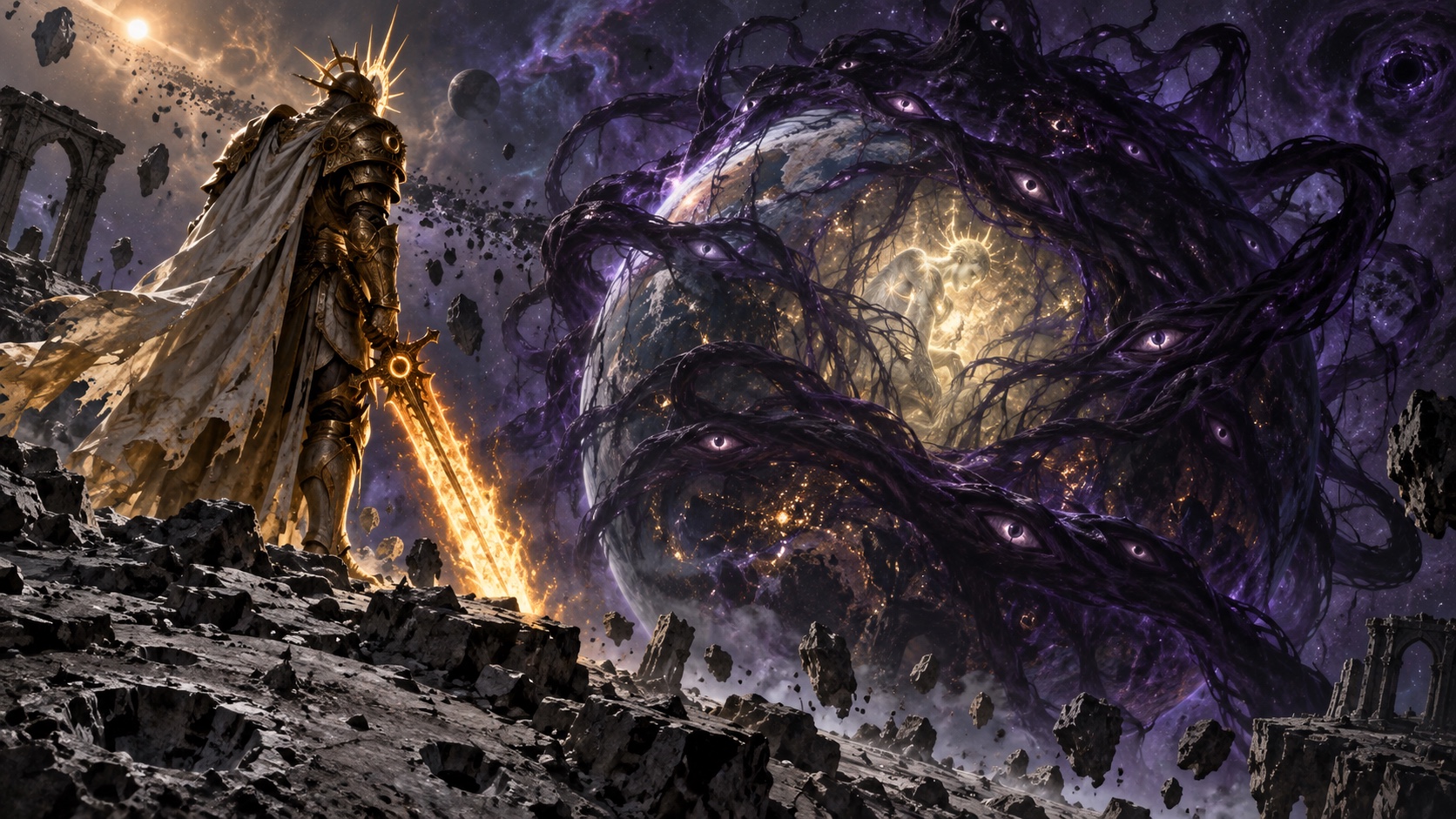
He drew his sword and split the planet apart, killing its inhabitants and the unborn titan together. To the Pantheon, this was an atrocity committed before every alternative had failed. To Sargeras, it was proof that his kin could not understand the scale of the threat. Their disagreement became the central moral fracture of Warcraft’s cosmos: is a living universe worth the risk that it might be corrupted?
The Burning Crusade
Sargeras decided that Void corruption could be prevented only if there were no worlds left to corrupt. He returned to Mardum, shattered the prison and recruited the demons he had once hunted. The eruption of fel energy transformed him, while the liberated hordes became the Burning Legion. Disorder now had strategy, portals and a commander who knew how the Pantheon worked.
The titans confronted their former champion at Nihilam. Sargeras destroyed their physical forms, although their spirits survived and would reappear much later in Legion. He then turned entire civilizations into weapons. On Argus, Archimonde and Kil’jaeden accepted his offer of power; Velen escaped with the future draenei. Argus’s own world-soul was tortured into the engine that helped demons return again and again.
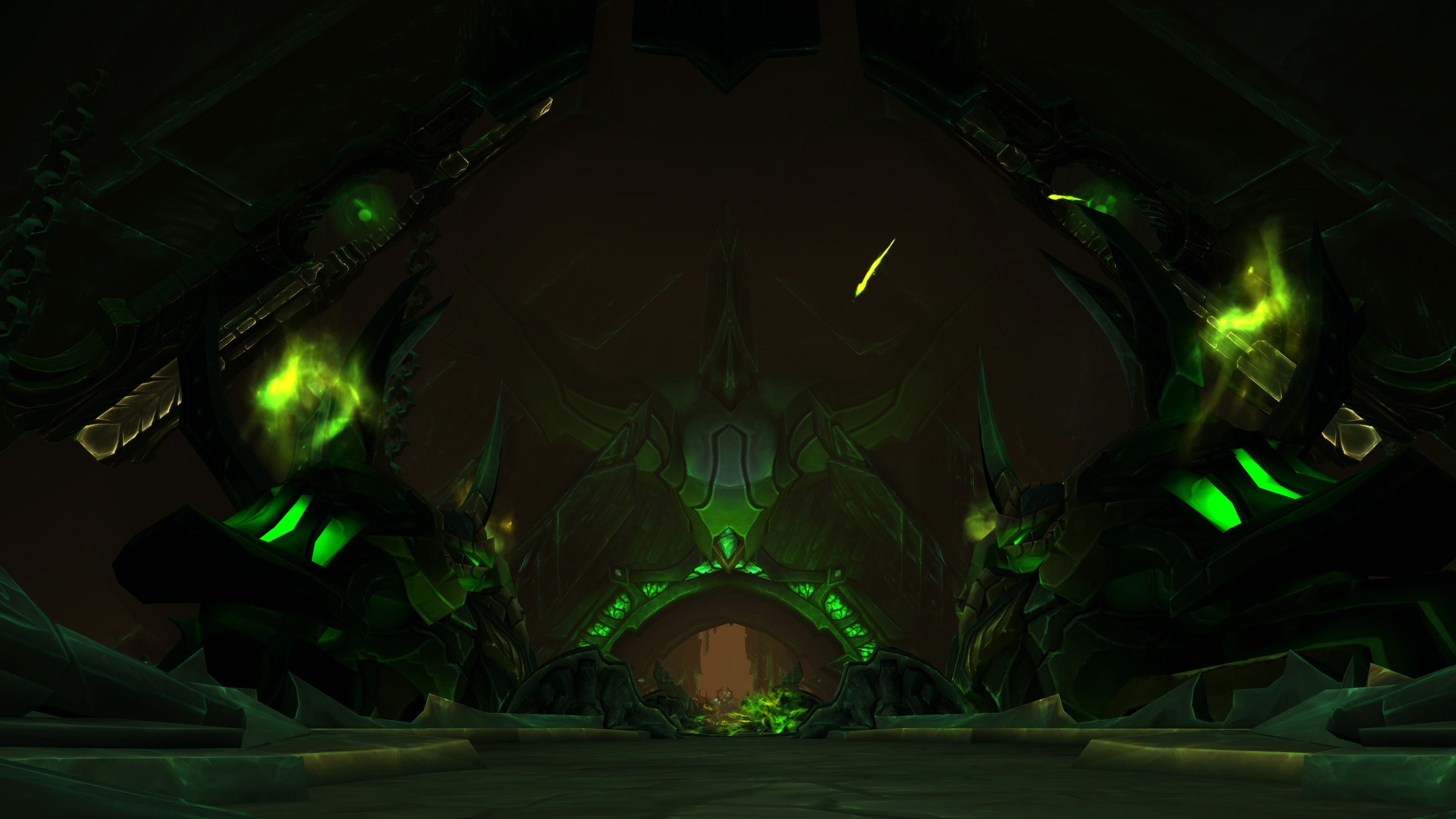
This was not conquest for territory. The Legion burned worlds so that the Void could never claim them. Sargeras had turned a defensive calculation into an infinite war of extermination.
Why Azeroth became the center
While the Pantheon searched for world-souls, Aggramar sensed an exceptionally powerful presence on Azeroth. The planet was already infected by Old Gods and ruled by their Black Empire. Because the titans feared harming the soul within, they sent titan-forged armies and keepers rather than fighting directly. The Old Gods were imprisoned, elemental lords were bound, and the surface was ordered—but the corruption was contained, not erased.
From that moment, Azeroth represented opposite hopes. To the Pantheon, its sleeping soul could become their greatest kin. To the Void, it was the prize that might open reality to the Void Lords. To Sargeras, it was either a weapon to seize or a world that must be destroyed before anyone else could claim it. Mortal history would repeatedly become the visible edge of this older conflict.
What later lore changed
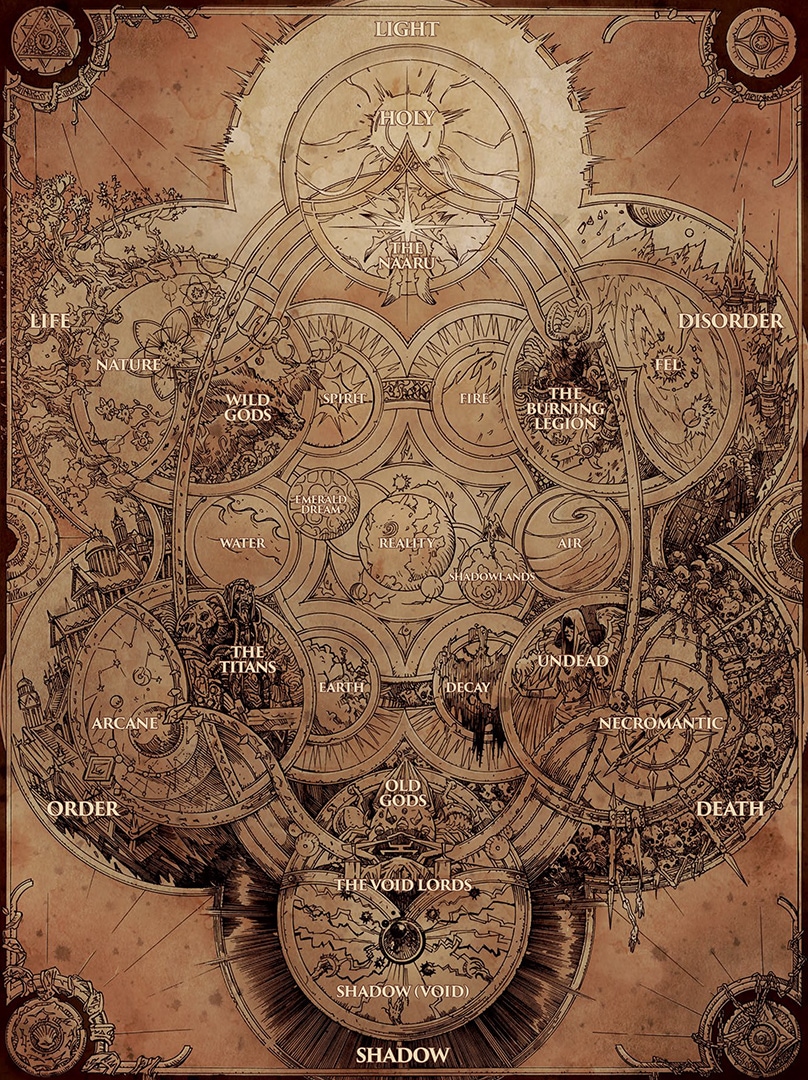
The six-force cosmology remains a map, not a final answer. Shadowlands revealed a Pantheon of Death, Zereth Mortis and the First Ones, placing the titans among several great cosmic orders. Blizzard’s narrative team also described Chronicle as history seen largely from the titans’ perspective.
The Pantheon exists; Sargeras formed the Legion after confronting Void corruption; Old Gods attacked world-souls. But who created the cosmos, how its six forces relate and whether titan Order is benevolent remain open to other witnesses—and future stories.
The war before every war
Seen from this distance, Warcraft’s familiar conflicts are not isolated. Fel invasions, Old God whispers, titan machines and battles over Azeroth’s soul are different campaigns in the same argument. The Void wants every possibility, the Light demands a chosen path, Order builds systems, Disorder breaks them, and mortal lives are caught between cosmic solutions too absolute to be humane.
Azeroth matters not because it was the first world, but because it may be the world powerful enough to decide the contest. Long before anyone raised an Alliance banner or shouted for the Horde, the universe was already fighting over what might awaken beneath their feet.
Sources
- Blizzard: World of Warcraft Chronicle Volume 1 - Blizzard: The Lore of the Titans - Blizzard: Warcraft III — The Story So Far - Blizzard: The Story So Far — Dragon Aspects - Blizzard: Antorus, the Burning Throne - Blizzard: Journey Through Zereth Mortis - BlizzCon 2019 lore Q&A summary: Chronicle’s titan perspective