
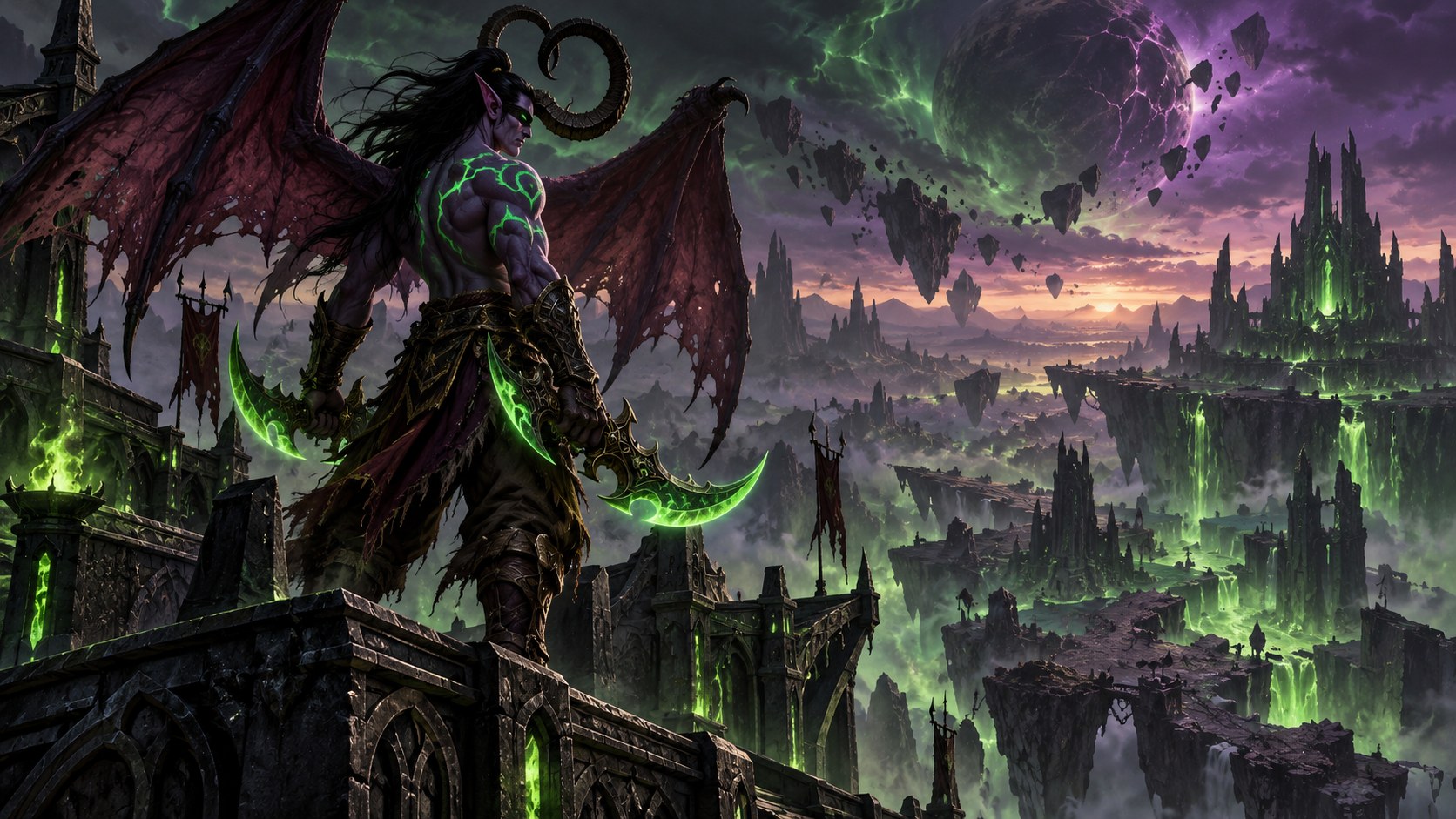
Illidan Stormrage helped end the Burning Legion’s crusade after spending much of his life fighting the people who would become his allies. He accepted power from Sargeras, ruled Outland through force and died beneath the weapons of Azeroth’s champions. When he returned, the same champions needed his knowledge to take the war to the Legion.
His story rewards more than a verdict of hero or villain. Across Warcraft III, The Burning Crusade and Legion, Illidan repeatedly identifies a real danger and decides that he alone may choose the price of defeating it. Sometimes he pays that price himself. Often, other people do.
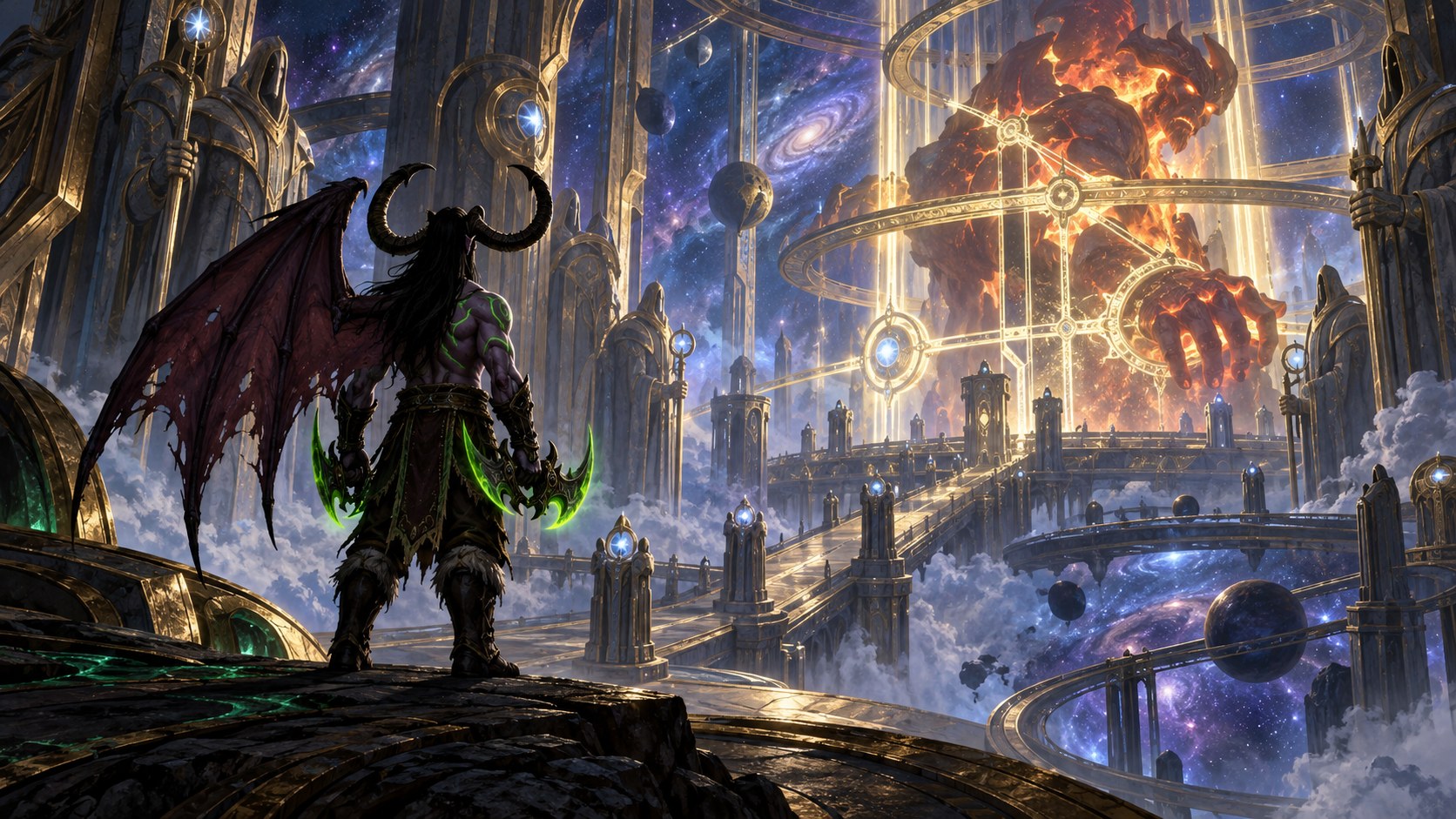
Cover: Illidan surveys Outland from his stronghold. Original AI-generated Azeroth Chronicle illustration; a conceptual reconstruction.
A gifted sorcerer becomes the Betrayer
Illidan grew up alongside his twin brother, Malfurion, and their friend Tyrande Whisperwind. During the War of the Ancients, he sought the power to resist the demonic invasion even as his choices made him appear to serve it. Sargeras burned away his eyes, replacing ordinary vision with magical sight, and marked his body with power. Illidan ultimately helped oppose the Legion, but his dealings with the enemy left lasting distrust.
Legion’s quest Ravencrest’s Legacy presents an especially troubling memory of his wartime service. Players act through Illidan as he drains the life energies of his own Moon Guard to strengthen his attacks. The soldiers protest while he justifies their deaths as necessary to prevent a greater defeat. The sequence makes his idea of sacrifice painfully specific.
His famous weapons also date to this conflict. The Twin Blades of Azzinoth belonged to a doomguard commander whom Illidan killed. Taking an enemy’s weapons became part of his recognizable identity long before the horns and wings associated with his later transformation.
Ten thousand years beneath Hyjal
After the Sundering, Illidan used water saved from the original Well of Eternity to create another Well on Mount Hyjal. He believed arcane power would be essential if the Legion returned. The survivors had just lost much of their world to a catastrophe centered on that power, and his attack on fellow night elves who discovered him made the confrontation worse.
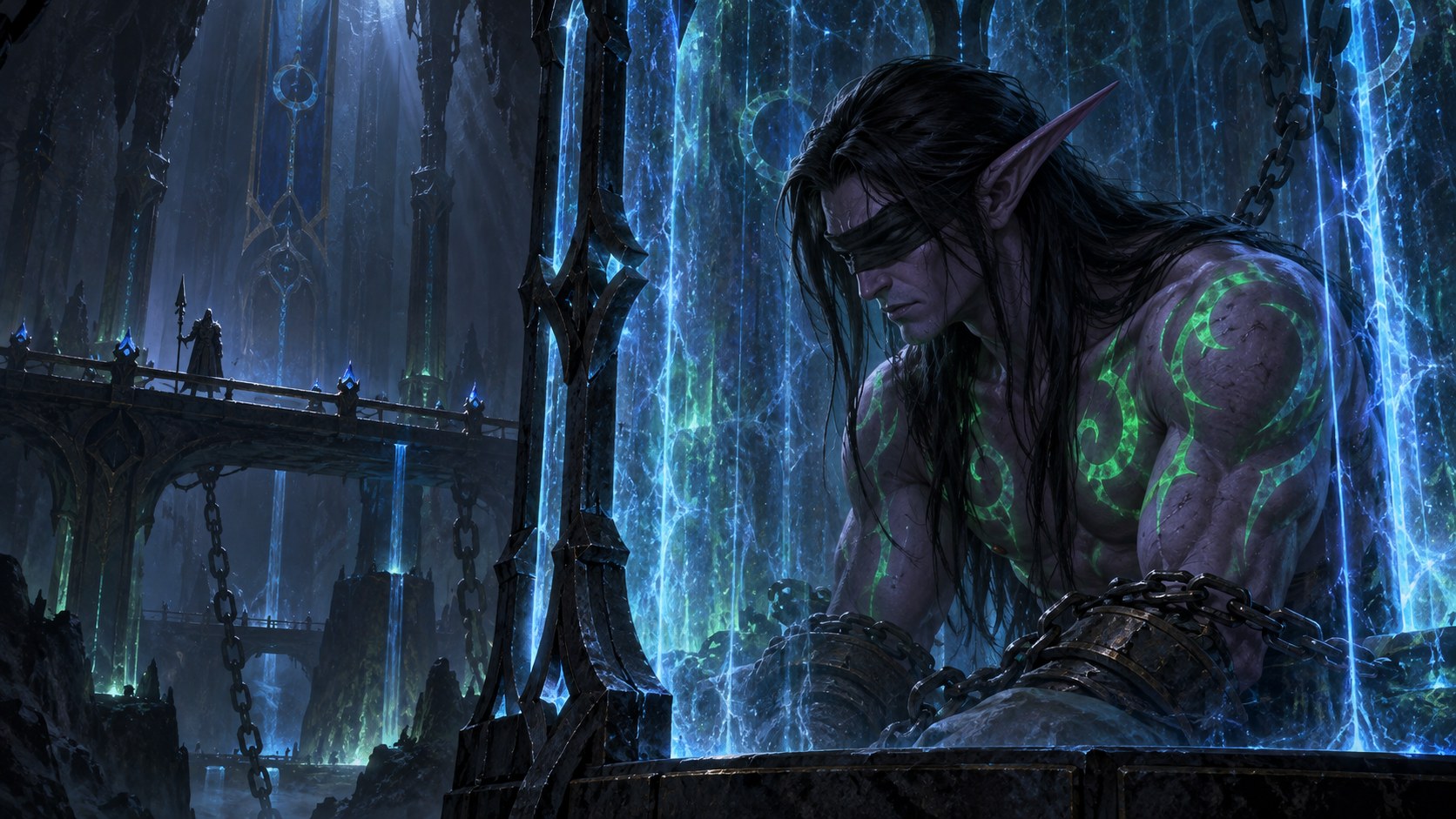
Malfurion sentenced his brother to imprisonment. Maiev Shadowsong and the Watchers guarded him through the long centuries that followed. The original sentence had no planned release date; the familiar ten thousand years describe how long he remained confined before events forced a change.
The Legion did return during the Third War. Tyrande freed Illidan because she needed his strength, killing guards who refused to surrender their prisoner. His release therefore created fresh deaths and grievances before he had even reached the battlefield. His expectation of another invasion had proved correct, while his relationship with night elf society remained deeply damaged.
Arthas helps create his future enemy
Arthas directed the newly freed Illidan toward the Skull of Gul’dan. The death knight wanted Tichondrius eliminated without openly challenging the Legion himself. Illidan’s appetite for power offered him a way to arrange that result.
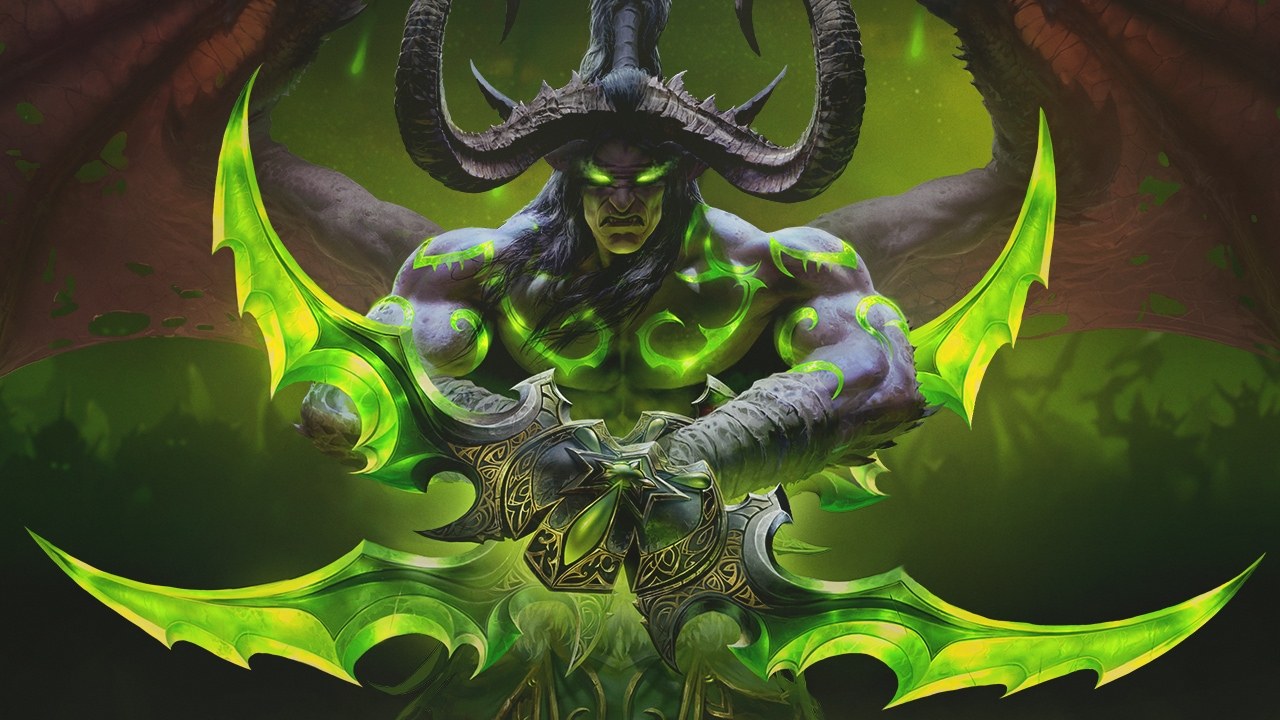
The skull was being used to corrupt the forests. By absorbing its power, Illidan gained the strength to kill Tichondrius, along with the horns, wings and demonic body that define his familiar appearance. He also acquired knowledge from Gul’dan’s memories. Malfurion responded to the transformation by banishing him.
That sequence separates two changes often compressed into one. Sargeras had taken Illidan’s eyes during the ancient war; the Skull of Gul’dan transformed him thousands of years later. His victory in Felwood also served Arthas’ immediate interests. Their eventual duel at Icecrown followed an earlier encounter in which each had found the other useful.
Kil’jaeden’s orders and the defeat at Icecrown
Kil’jaeden ordered Illidan to destroy the Lich King, whose growing independence threatened the Legion’s control. Illidan obtained the Eye of Sargeras and attempted a destructive spell against Icecrown from Dalaran. Malfurion and his allies interrupted the ritual.
The pursuit also exposed Maiev’s willingness to manipulate her allies. She claimed Tyrande had died, hoping to keep Malfurion focused on capturing Illidan. When the truth emerged, Illidan helped rescue Tyrande from the Scourge. Even amid their rivalry, the brothers could still cooperate for her sake.
Illidan escaped to Outland and, with Lady Vashj, Kael’thas and Akama, overthrew Magtheridon. Kil’jaeden nevertheless found him and demanded another attempt against the Frozen Throne. At Icecrown, Arthas defeated him and continued upward to unite with the Lich King. Illidan survived and returned to Outland. The defeat left him preparing for retaliation from a demon lord whose commands he had failed twice.
Outland’s ruler and the war beyond it
The Black Temple had once been Karabor, a sacred draenei sanctuary. Akama and his Broken followers helped Illidan seize it in the hope of freeing their people. Under their new ruler, they found further oppression. Akama’s eventual betrayal grew from those experiences, rather than a sudden failure to appreciate Illidan’s ambitions.
William King’s 2016 novel Illidan expands the campaign taking place beyond what players saw in The Burning Crusade. On Nathreza, Illidan and his demon hunters raid a dreadlord archive to obtain information leading to Argus. He then destroys the gateway in a catastrophic attack on the Legion’s stronghold. The plan shows the scale of his offensive, but its preparation includes using the souls of the dead to power his magic.
Azeroth’s adventurers, Akama and Maiev ultimately bring him down in the Black Temple. The later account of his wider strategy gives that confrontation additional context. It leaves the Broken’s suffering, and the reasons people fought his rule, intact.
The Illidari inherit his methods
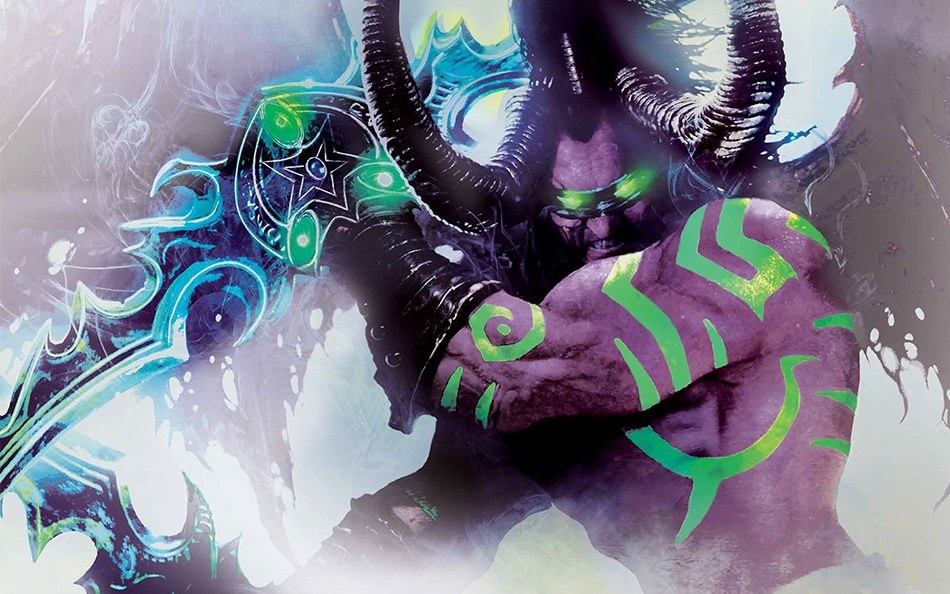
Illidan trained demon hunters to fight the Legion with demonic power. Their transformation demanded severe physical and psychological sacrifices, and their struggle to control the power within them continued after initiation. Shared purpose held the surviving recruits together.
Blizzard’s animated short Harbingers: Illidan follows a recruit whose loyalty is tested when she sees how closely her commander resembles the enemy. His answer rests on their shared losses and willingness to fight. The short explains the devotion of the Illidari while showing why outsiders could find them terrifying.
Legion lets players experience that commitment from inside the order. The demon hunter opening sends the Illidari to Mardum while their master faces his attackers at the Black Temple. Their mission and his defeat occur within the same campaign. For these disciples, his death interrupts a war they still believe must be fought.
A return without accepting prophecy
Gul’dan later sought to use Illidan’s preserved body as a vessel for Sargeras. The struggle over that body and Illidan’s surviving soul culminated in his restoration at the Nighthold. He joined Azeroth’s defenders and eventually used the Sargerite Keystone to open the passage that brought Argus within reach.
On Argus, the prime naaru Xe’ra tried to transform him through the Light, insisting on a destiny she believed he must fulfill. Illidan resisted. When she bound him and continued, he broke free and destroyed her. His declaration, “My destiny is my own,” rejects her claim to decide what he must become. Turalyon’s immediate outrage shows how dangerous that confrontation was for their alliance.
The scene also invites an uncomfortable comparison with Illidan’s own conduct. He demands control over his body and future, after repeatedly deciding what others must surrender for his plans. Recognizing the coercion in Xe’ra’s actions does not require overlooking that contradiction.
The prisoner chooses to remain
After Azeroth’s champions defeated Argus the Unmaker, the Pantheon imprisoned Sargeras. Illidan remained behind at the Seat of the Pantheon to stand watch over the enemy he had pursued for so long. The titans accomplished the imprisonment; Illidan did not defeat Sargeras alone.
His choice completes the Legion chapter with a striking change in circumstances. Once sentenced to confinement by others, he now accepts a vigil that keeps him apart from home. He has helped achieve the objective that dominated his life, yet chooses continuing responsibility over a return to the society that condemned him.
Illidan’s contribution to the Legion’s defeat is substantial. So are the deaths, coercion and failed judgments along the way. Warcraft gives both room to remain part of his history, which is why his story still supports arguments that a simple redemption would have ended.
Sources
Blizzard’s Burning Crusade Classic: The Story So Far covers the Warcraft III chronology, supplemented by Ascension of the Lich King. The archived Warcraft Encyclopedia entry on Illidan supplies historical background, while Ravencrest’s Legacy preserves the later in-game memory and its dialogue.
For weapons and transformation, see The Twin Blades of Azzinoth, Skull of Gul’dan and the Arthas account. Blizzard’s Black Temple Beat Down explains Akama’s opposition.
The expanded Outland narrative follows William King’s Illidan, introduced in Blizzard’s publication announcement, with the Nathreza campaign cross-checked against the Warcraft Wiki entry. The official novel artwork comes from Blizzard’s cover reveal.
The Mardum mission is described in Blizzard’s Being Illidari. The Illidari perspective appears in Harbingers: The Story of Illidan. His confrontation with Xe’ra is shown in Blizzard’s Rejection of the Gift, with dialogue preserved in The Child of Light and Shadow. His resurrection and final vigil are cross-checked against Illidan Stormrage.