Humans and orcs entered Warcraft as enemies, but their histories began on separate worlds long before either knew the other existed. Both peoples descended from giants whose origins involved the titans. Both survived by forming communities that could compensate for their smaller bodies. Their eventual war followed thousands of years of change, migration and political decisions.
The resemblance has limits. Humanity emerged through the curse of flesh on Azeroth. Orc ancestry developed through the transformation of elemental beings on Draenor. Following those different histories explains why neither Stormwind’s soldiers nor the invading Horde can stand for everything their people had been.
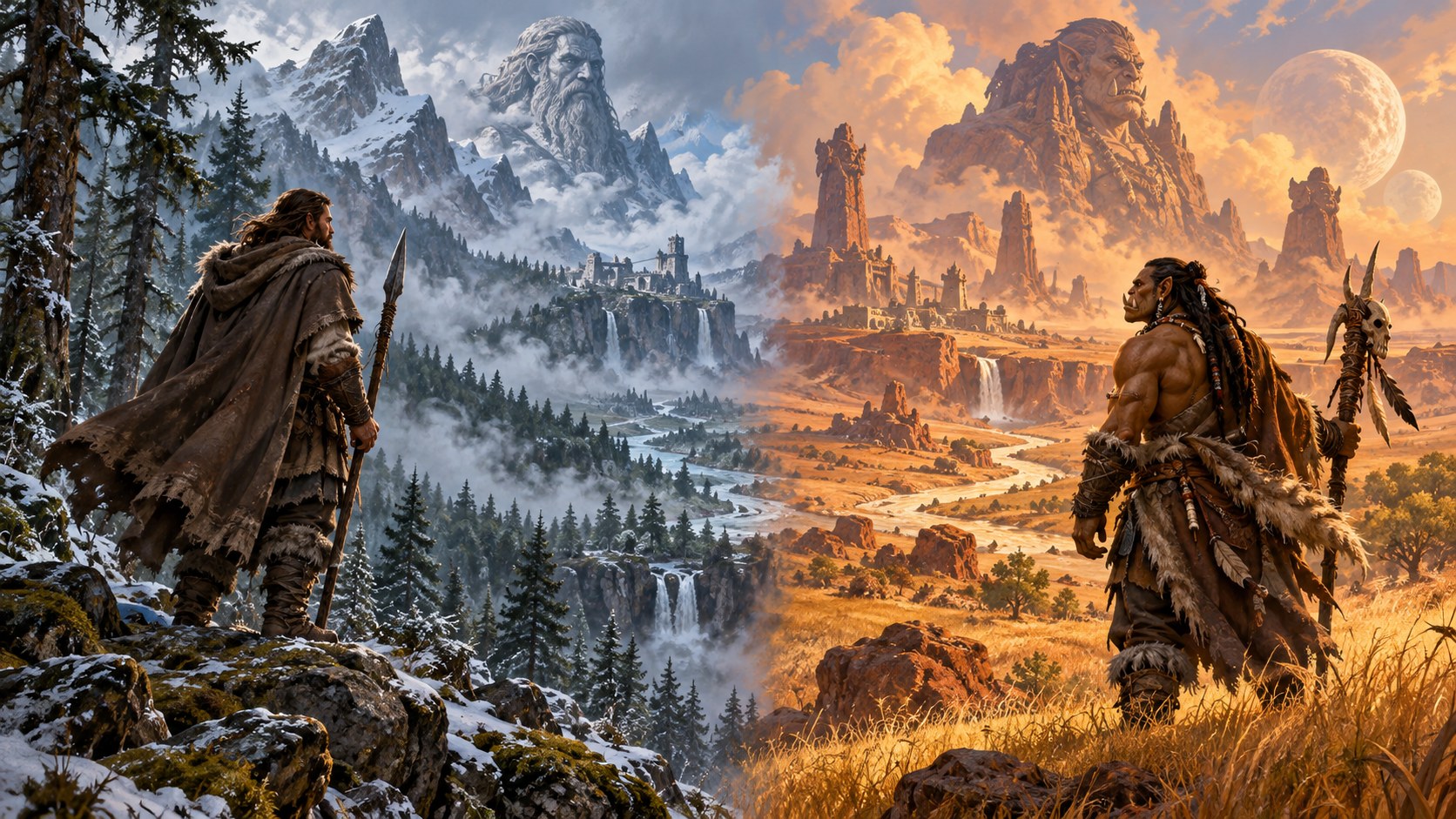
Cover: Two separate ancestral histories on Azeroth and Draenor, presented together as a conceptual composition. Original AI-generated Azeroth Chronicle illustration.
The children the vrykul king rejected
Humans descend from the vrykul, whose earliest ancestors were titan-forged beings. The curse of flesh changed those durable creations into mortal creatures. Later, some vrykul families began having unusually small children, whom their ruler considered unfit to survive.
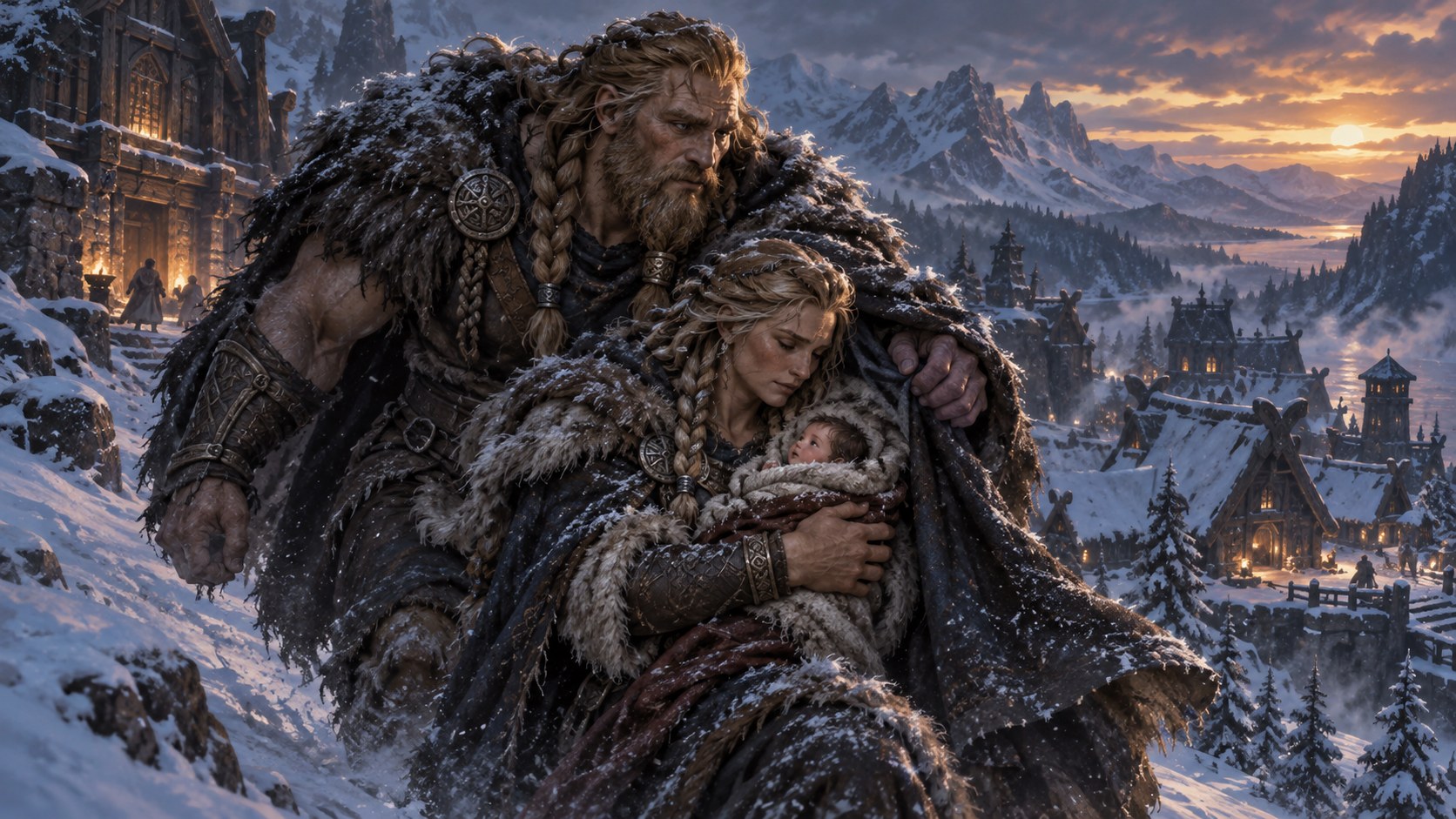
King Ymiron ordered these infants killed. Some parents disobeyed and protected them, placing the children’s lives above his demand for purity. The surviving lineages eventually gave rise to humanity. Their smaller size became the starting point for a different people, rather than the end Ymiron intended.
World of Warcraft makes the discovery personal in Howling Fjord. In the quest Anguish of Nifflevar, players witness Ymiron’s decree through a vision of the past. Thoralius then recognizes the connection between the vrykul and humans. For humanity, this was a forgotten family history recovered during the campaign against the Lich King.
Refugees become tribes, and tribes become Arathor
Children saved from Ymiron’s order were sheltered among vrykul in the southern lands associated with Tirisfal. That community belonged to an older migration connected with the keeper Tyr. Over generations, the descendants of the protected children spread through the forests and hills that would become the Eastern Kingdoms.
Human society developed as separate tribes. A unified kingdom arrived much later, when Thoradin and the Arathi brought those tribes under the authority of Strom. Conquest helped create that unity, while the threat posed by the Amani gave it an urgent military purpose.
Thoradin’s alliance with the high elves transformed human access to magic. During the Troll Wars, elven instructors trained a hundred human magi. Together, human and elven spellcasters unleashed the devastating fire that helped decide the final battle. Arathor’s survival depended on cooperation with another people and on knowledge its warriors had not previously possessed.
Stromkar, Thoradin’s sword, preserves another part of his story. Blizzard’s warrior artifact history connects it to his unification of humanity and his later battle against a C’Thraxxi beneath Tirisfal. The founder of Arathor became part of the same region’s history of resistance to ancient threats.
Seven kingdoms from one political inheritance
Arathor’s unity did not last. Growing settlements developed their own interests and institutions, gradually loosening Strom’s authority. Dalaran became a center of magical study. Kul Tiras built its prosperity around shipping. Other communities established kingdoms whose rulers increasingly made decisions for themselves.
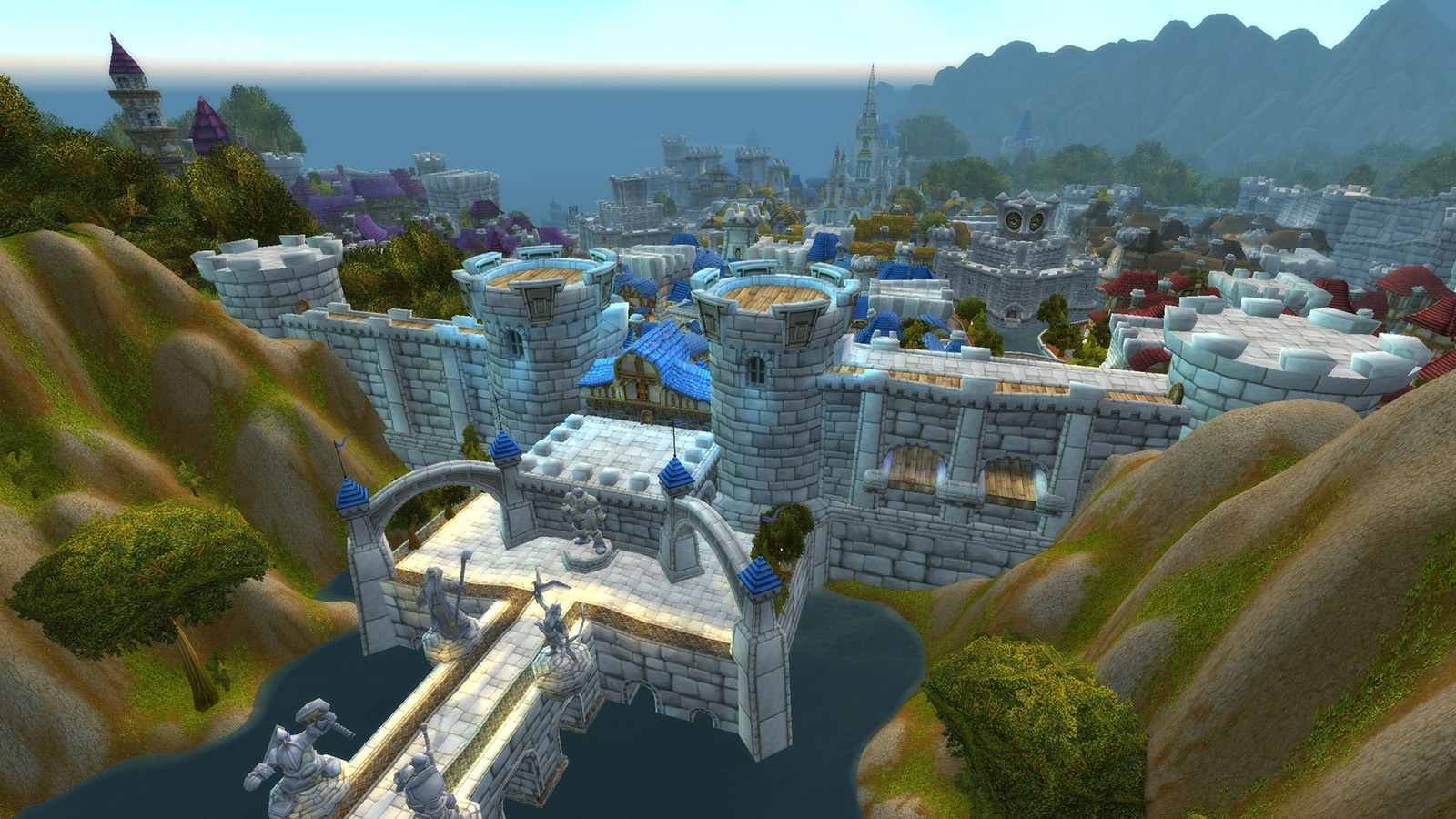
The resulting seven kingdoms were Stormwind, Lordaeron, Stromgarde, Dalaran, Kul Tiras, Gilneas and Alterac. Stormwind belonged to a later movement south; it was neither humanity’s birthplace nor the original capital of Arathor. Strom itself survived as Stromgarde after losing its imperial position.
These distinctions matter when the orcs enter the story. Human kingdoms already had rivalries, border disputes and different priorities. The Alliance of Lordaeron formed after Stormwind’s fall, in response to a widening emergency. Treating a single, permanent Alliance as humanity’s natural political condition obscures how often its leaders had to build cooperation anew.
An orc’s ancestry begins with a mountain
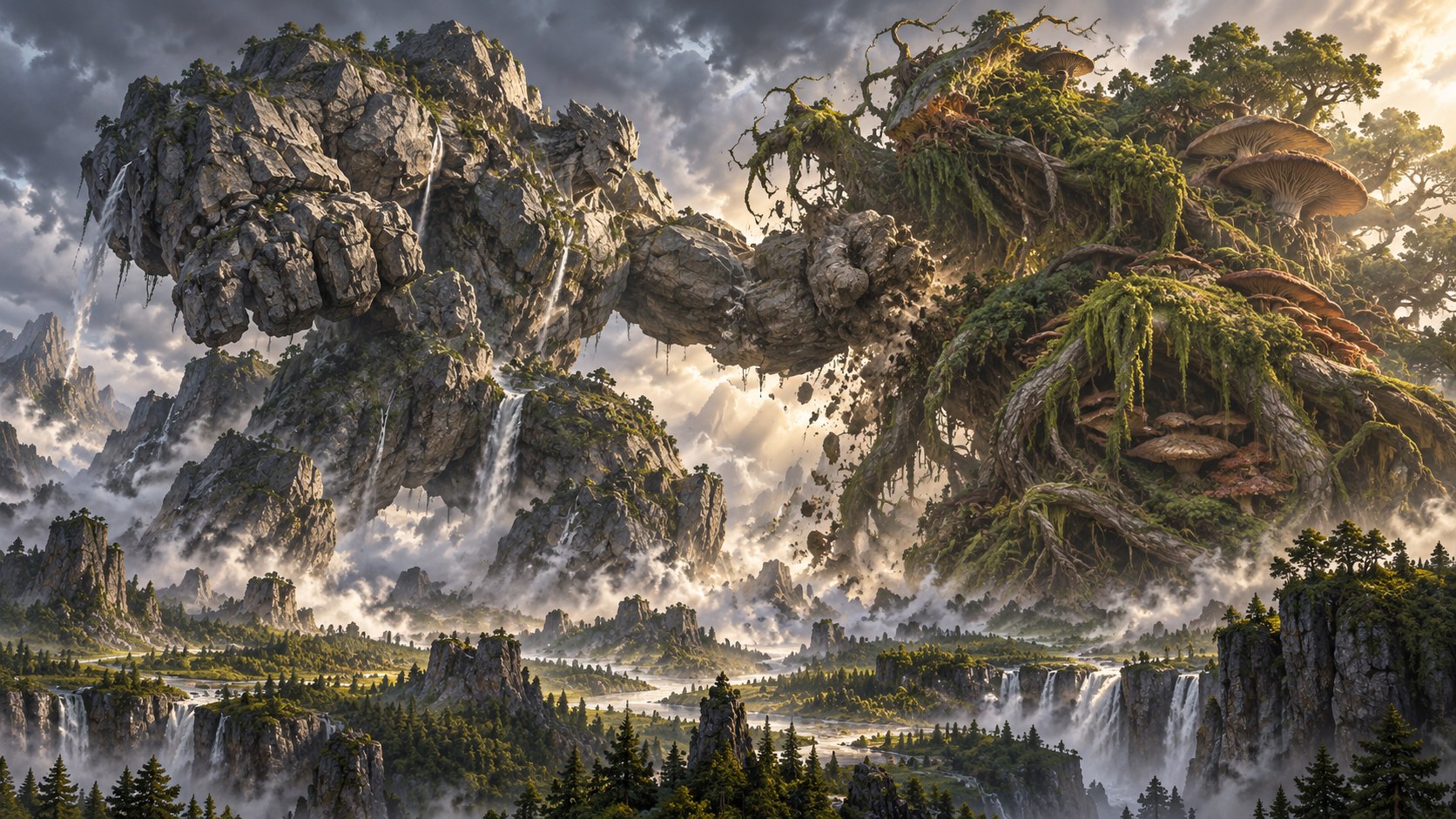
On Draenor, Aggramar found a world threatened by the Evergrowth, a vast collective of plant life. He created the enormous elemental being Grond to oppose it. The battles that followed produced generations of smaller creatures, as fragments of Grond gave rise to the colossals and their remains to the magnaron.
The destruction of the Sporemound Botaan released spores filled with the Spirit of Life. Those energies altered the descendants of stone. Over immense spans of time, the lineage produced gronn, ogron, ogres and finally orcs. Chronicle’s account places the familiar orc at the end of a long sequence of transformations.
Draenor’s landscape retains connections to that struggle. Grond’s fallen body became associated with Gorgrond, while his head formed the site later known as the Throne of the Elements. A place central to orcish shamanism therefore also belonged to the physical remains of their remote ancestor.
The comparison with humans is striking, but the causes remain different. Draenor’s life energies changed the orcs’ ancestors. The curse of flesh changed the ancestors of humans on Azeroth. Neither account describes titans directly crafting ordinary humans or orcs in their familiar form.
Clans existed long before the Horde
Early orcs were small beside many of Draenor’s other inhabitants. Communities sheltered underground, including in the caves beneath Gorgrond, where survival and freedom could matter more than access to richer territory. Cooperation helped them endure threats that an isolated individual could scarcely confront.
As orcs spread, their communities developed distinct clan identities. Shared ancestry did not produce identical customs. The Blackrock remained closely connected to Gorgrond and its resources. The Frostwolves built strong bonds around family and survival, while the Thunderlords became renowned hunters and beast masters. Local conditions shaped how different groups lived and fought.
Shamanism connected orcs with the elements and their ancestors. Those practices predated the demonic Horde and continued to matter after its rise. Dragonflight’s orc heritage story revisits the Kosh’harg festival, bringing clans together around the blessings of clan, land and ancestors. It gives players a view of traditions that extend beyond military service to a warchief.
Warlords of Draenor is useful for seeing these cultures, but its alternate timeline requires care. Its Iron Horde and later Mag’har history cannot simply be substituted for the sequence that led the original Horde into Azeroth.
How Kil’jaeden exploited a living tradition
The draenei had settled on Draenor after fleeing the Burning Legion. Kil’jaeden’s pursuit of them brought the orcs into his plans. He exploited the authority of ancestral voices by appearing to Ner’zhul as the shaman’s deceased wife, Rulkan, and encouraging belief in a supposed draenei threat.
The deception worked through trust within orcish society. Ner’zhul’s standing gave the warnings influence far beyond his own household. When he sought guidance at Oshu’gun, the real ancestral spirits exposed the manipulation. Gul’dan, however, was willing to continue serving the demon and acquired the power to push the campaign forward.
The resulting Horde waged a genocidal war against the draenei. Demonic manipulation explains how its leaders mobilized fear and ambition; it does not erase the victims or the decisions made by those who carried out the attacks. Christie Golden’s Rise of the Horde follows that destruction through people such as Durotan and Orgrim, whose responses reveal divisions within orc society.
Green skin and demon blood are different questions
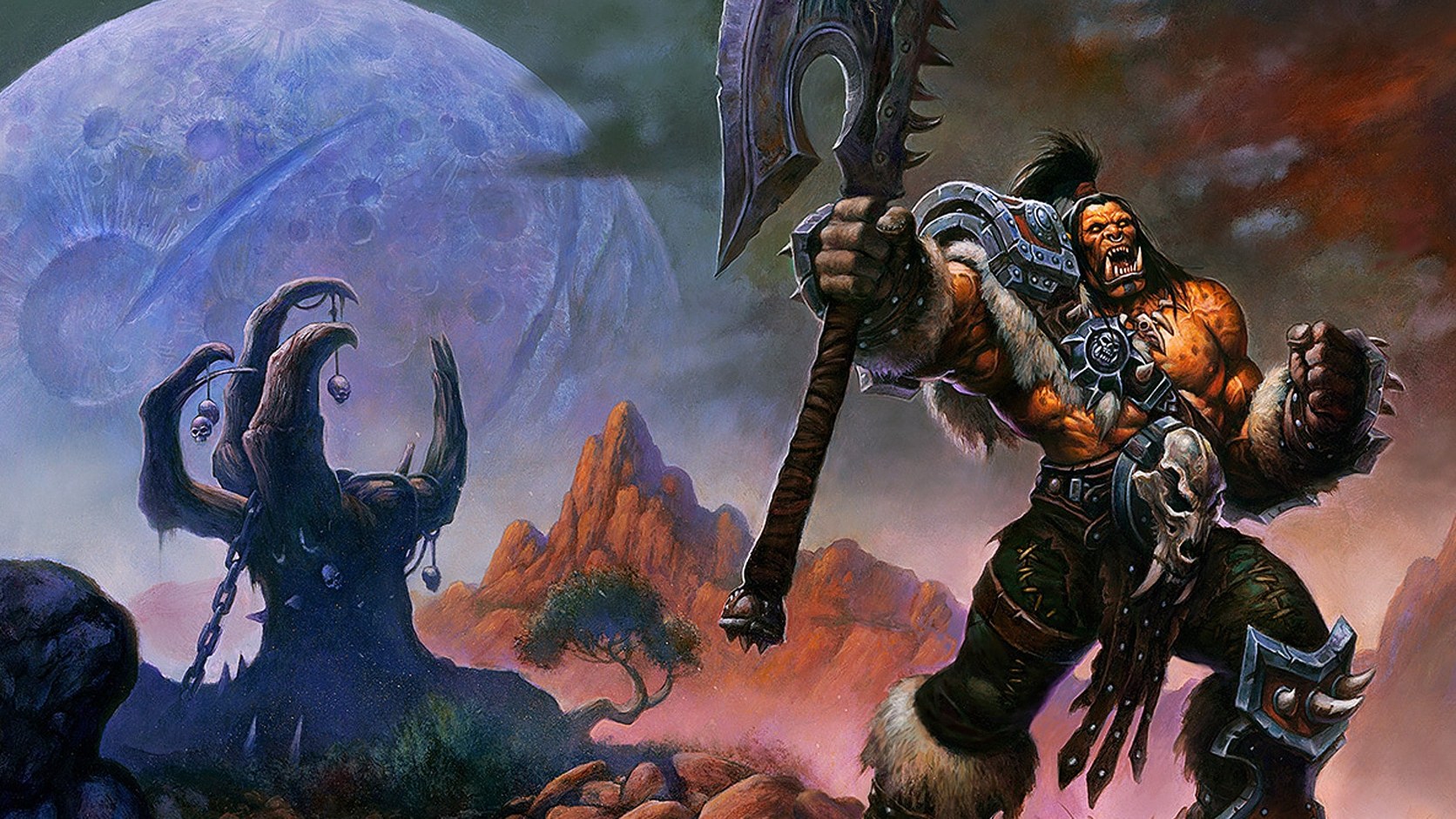
Mannoroth’s blood bound those who drank it to demonic power and intensified their bloodlust. Green skin, however, also resulted from exposure to fel corruption. An orc did not have to drink the blood personally to be affected by the changing magical environment.
Blizzard’s short story Hellscream makes that distinction visible. Its vision of the original history shows patches of green appearing even on orcs who had not handled the corrupting energy. The drink then imposes a further loss of freedom. Skin color alone cannot establish which decisions an individual made.
Garrosh’s brown skin carries a different historical memory in Heart of War. An orc child in Orgrimmar finds it strange because green skin has become familiar. Garrosh, raised among the Mag’har, experiences that reaction as evidence that people have forgotten their origins. The scene shows how quickly the visible consequences of a catastrophe can become a community’s expectation of what is normal.
Two histories meet at the Dark Portal
Gul’dan and the Shadow Council worked with Medivh, possessed by Sargeras, to open the Dark Portal. The invasion brought the Horde from a devastated Draenor into Stormwind’s world. Human participation in the portal’s creation mattered as much as the warlocks on the other side; the Legion’s scheme exploited power on both planets.
This was the beginning of their great conflict, after long histories in which neither people had been defined by the other. Human kingdoms had emerged from migration, tribal consolidation and political fragmentation. Orc clans had developed through survival, regional traditions and relationships with the elements before the Legion reorganized them for conquest.
Their ancient ancestry makes the encounter more revealing. Two peoples descended from giants arrived at very different institutions, then mistook wartime experience for a complete understanding of their enemies. WoW’s quests and historical accounts let players recover the lives, beliefs and choices that preceded that meeting.
Sources
Human origins are supported by the in-game quest Anguish of Nifflevar, with migration and ancestry cross-checked against Early humans and Human. The in-game histories Arathor and the Troll Wars and The Seven Kingdoms cover the development of human states. See also Seven Kingdoms and Blizzard’s warrior artifact reveal.
The Draenor creation account follows Chronicle Volume II, cross-checked through Grond, Draenor and Orc. Clan differences are illustrated in Blizzard’s Frostfire Ridge preview; the later Kosh’harg story appears in the heritage armor introduction.
Blizzard’s Rise of the Horde introduction, Hellscream and Heart of War support the corruption and cultural-memory sections. The deception and portal are cross-checked through Ner’zhul, Oshu’gun and Dark Portal. Official images come from Hellscream and Blizzard’s human race guide.