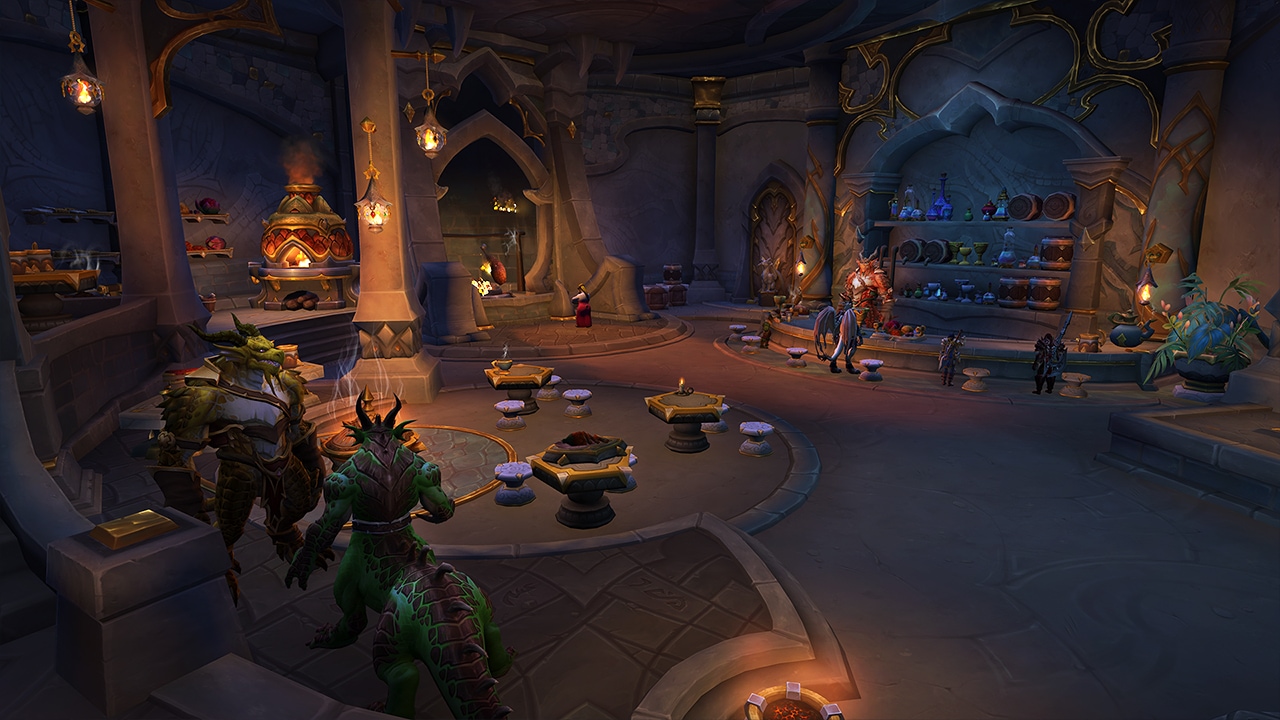
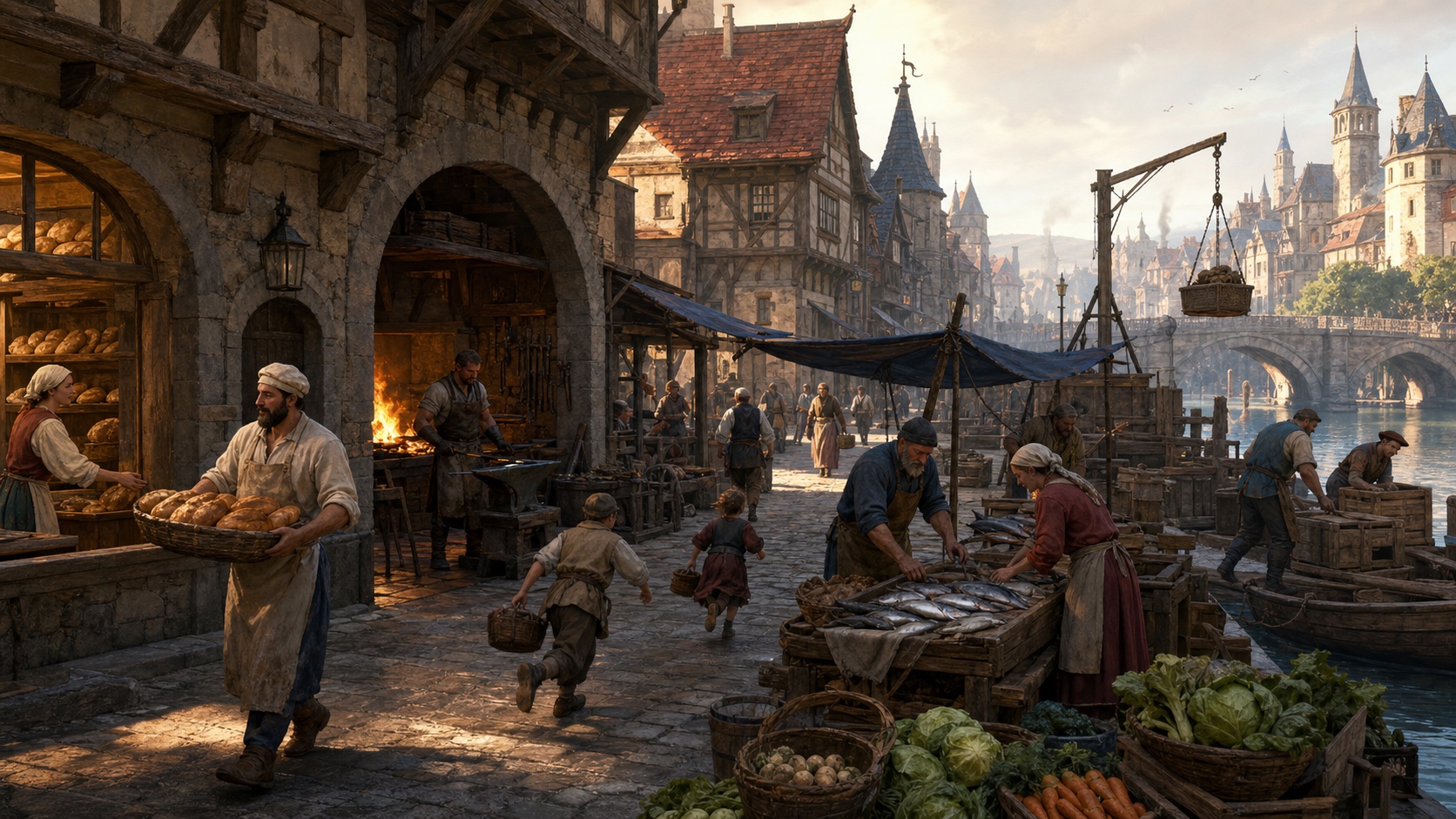
The hero leaves town before breakfast and returns carrying a dragon’s head. The baker who sold that hero a loaf was awake hours earlier, bought flour from someone the player never meets, repaired the oven after the last siege, and still has rent to pay. World of Warcraft compresses these lives into vendors, trainers, and background conversations, but the world is full of evidence that most people experience history very differently from its champions.
For them, survival is not one decisive victory. It is the work of reopening the shop tomorrow.
Work is the real daily quest
Most citizens are not professional adventurers. They farm, fish, cook, mine, sew, brew, carry cargo, keep animals, sell goods, or turn raw materials into things a settlement needs. Warcraft’s profession systems exaggerate the speed of that labor, yet preserve its structure: an apprentice finds a trainer, learns recipes, gathers materials, improves through repetition, and sells or commissions finished work.
Dragonflight made this economy unusually visible. Crafting orders connect customers with specialists, commissions pay the maker, and quality depends on skill, tools, ingredients, and specialization. Read as worldbuilding rather than interface, it suggests a society of workshops and reputations. A sword is not conjured by the auction house; ore passes through miners, carriers, smelters, smiths, merchants, and finally the buyer.
Children learn from people, not menus
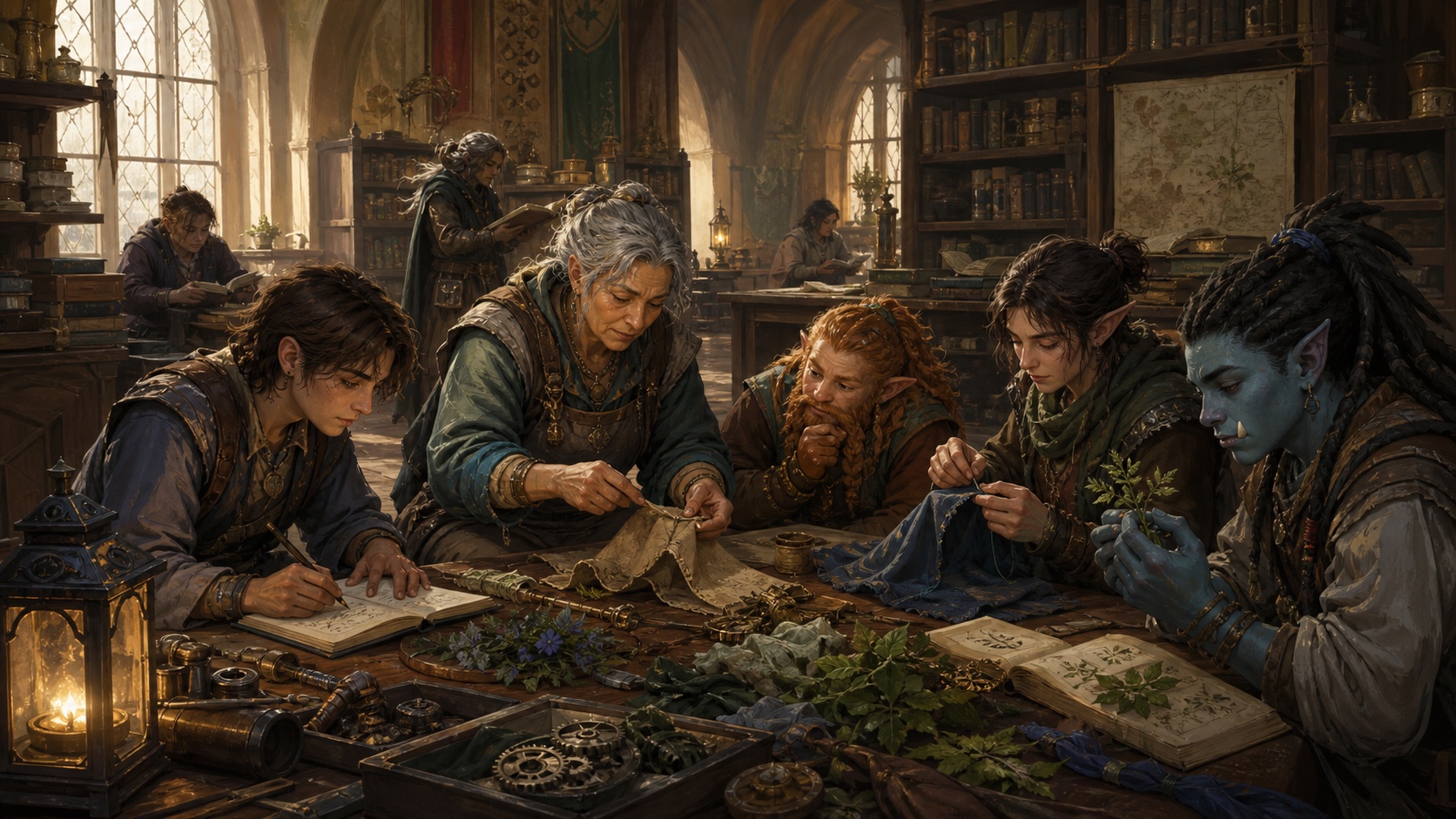
Azeroth has academies and libraries, but education is rarely standardized. Magic-heavy cultures maintain formal institutions; elsewhere, knowledge moves through families, temples, military orders, profession trainers, and apprenticeships. Blizzard’s Razor Hill guide places class trainers, profession trainers, vendors, an inn, and a flight master in one small settlement. A young orc can learn a trade and the customs of the wider Horde without ever entering a schoolhouse.
Stories show another layer. In Quest for Pandaria, young pandaren read, picnic, trade stories, and absorb communal memory from older travelers. That may be closer to ordinary childhood across Azeroth: practical instruction mixed with religion, oral history, local prejudice, and whatever books survived the last catastrophe.
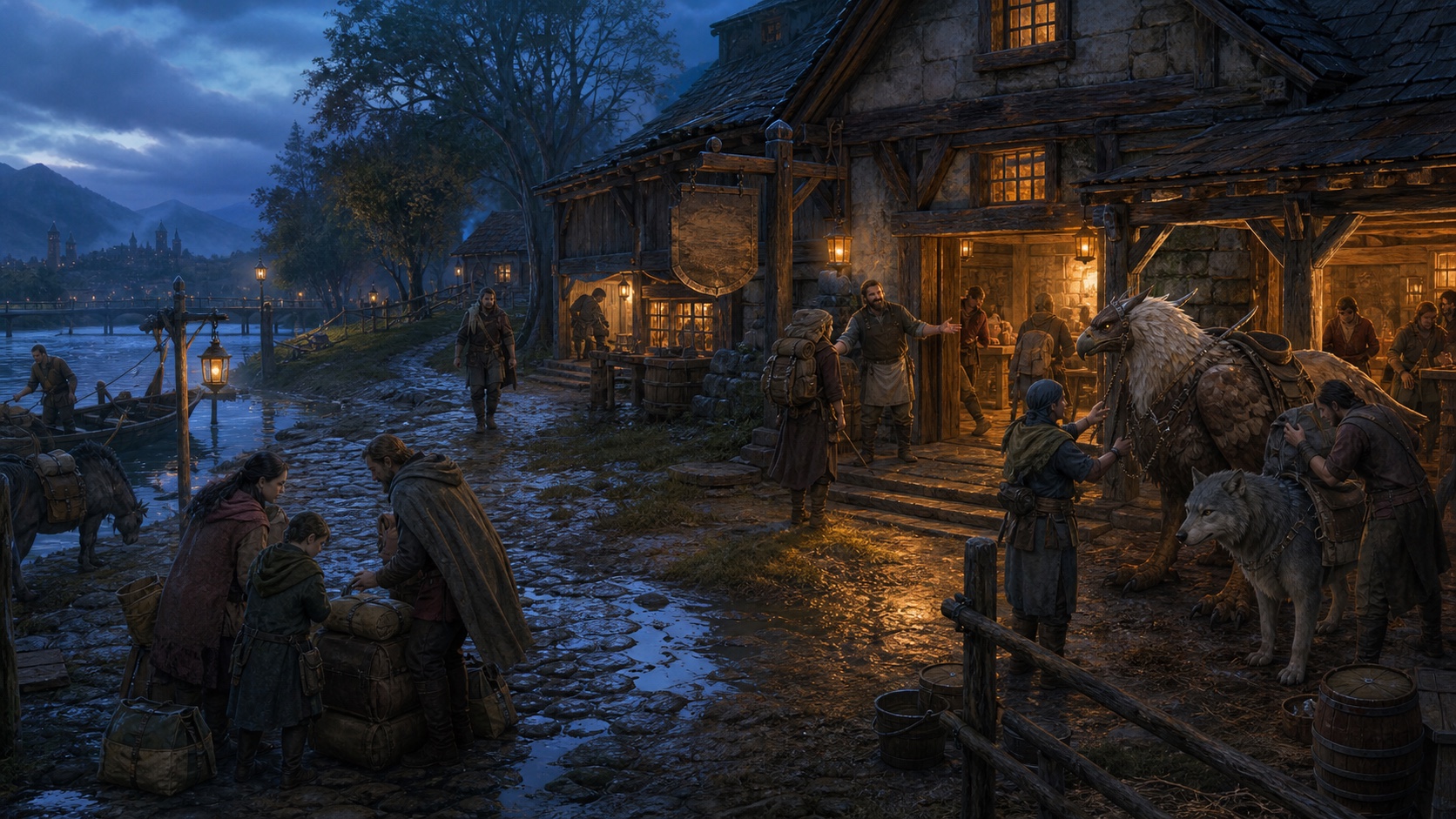
The road is measured in inns
Players treat a flight path as a convenience. A civilian would see an expensive network of trained animals, handlers, towers, docks, crews, and guarded stops. The official Razor Hill guide even describes travel as a service bought for a small fee. Boats and zeppelins link continents, while local roads remain vulnerable to weather, beasts, bandits, and war.
That makes the inn one of Azeroth’s most important institutions. It provides food, rumor, work, a bed, and a fixed point in an unsafe world. The hearthstone turns “home” into a magical address, but its long cooldown and attachment to an inn imply limits. Most freight still travels in a hold or wagon, and most families still pack for a journey they hope will end before dark.
Healing is both miracle and hard labor
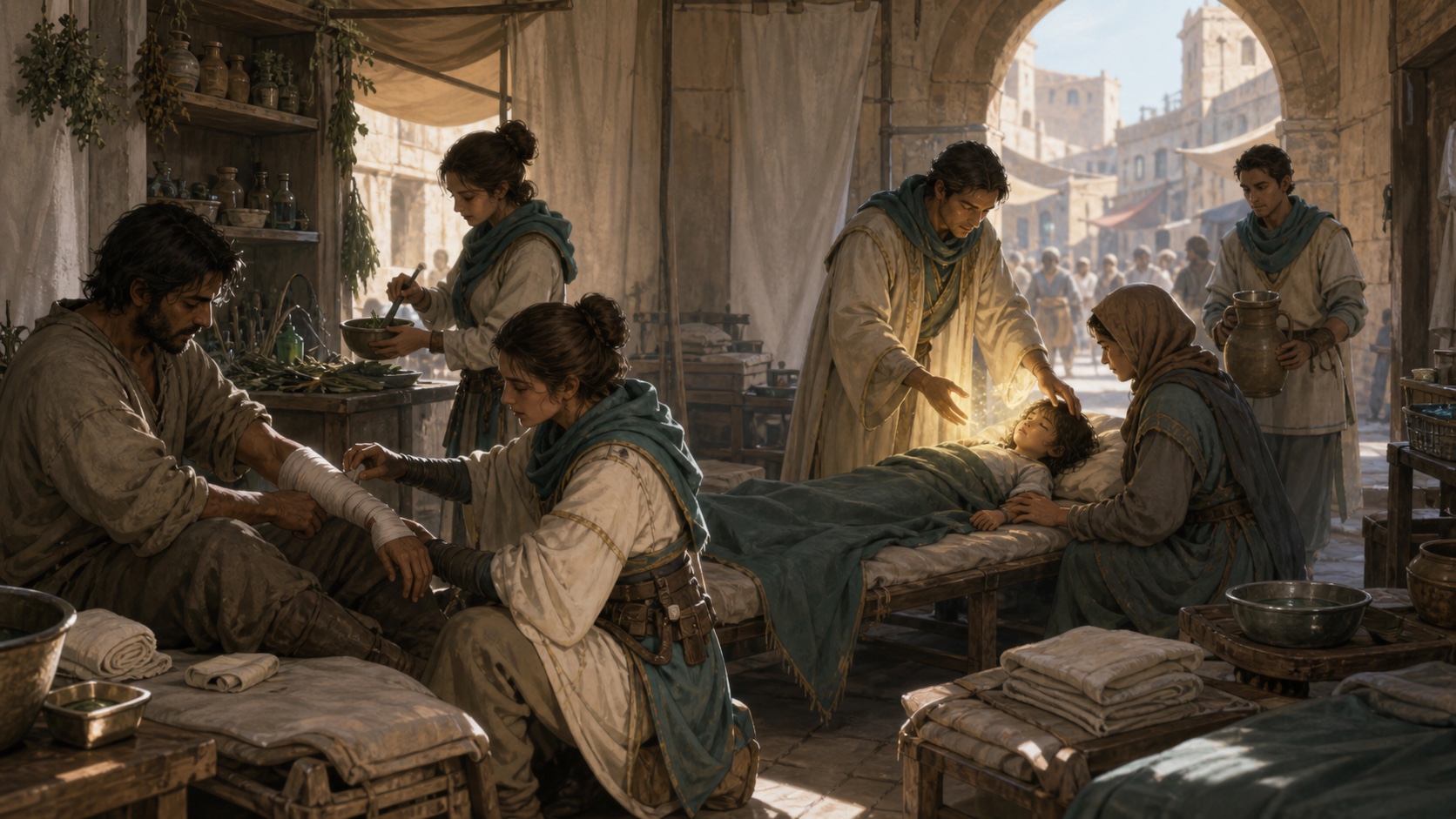
Magic does not make medicine effortless. Priests, druids, shamans, monks, and paladins can close wounds or fight corruption, but Azeroth also relies on bandages, herbs, antidotes, clean water, rest, and trained hands. The Shattrath Infirmary treats injured refugees and is described through in-game quests as understaffed enough to accept help across factional lines.
This distinction matters. A battlefield spell keeps someone alive; recovery still needs beds, supplies, caregivers, and time. Diseases and magical afflictions may also demand specialists unavailable in a village. The ordinary patient’s experience is therefore less like instant resurrection and more like any strained hospital: waiting, improvisation, family at the bedside, and healers deciding whose need is most urgent.
Love survives in public
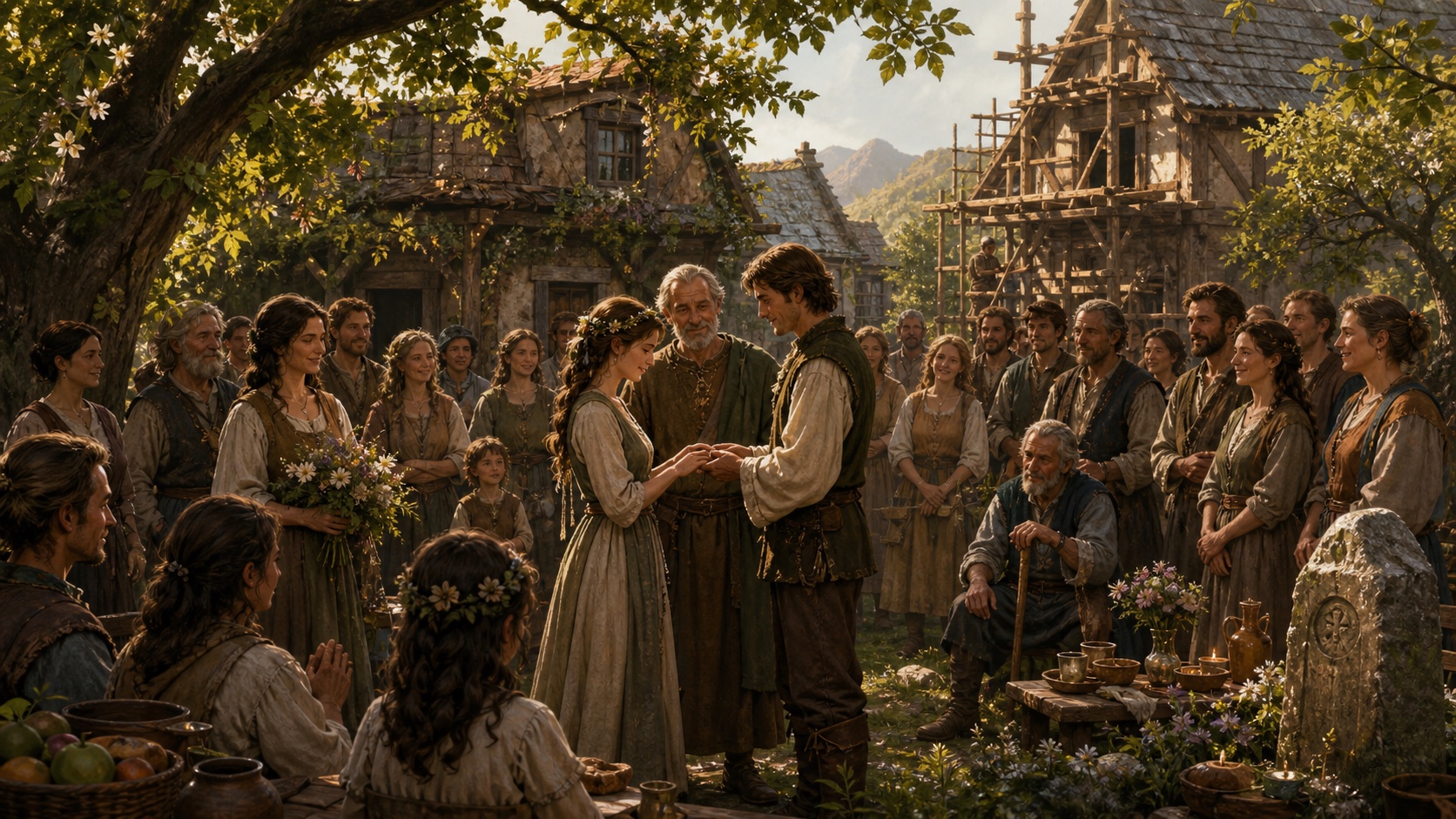
Warcraft gives few universal rules for marriage because its cultures differ, but it repeatedly shows vows, officiants, gifts, feasts, families, and communities witnessing a union. The Vow Eternal presents a lavish political wedding, yet its recognizable core is intimate: two people make promises before those who know them. A village ceremony would be smaller, not emotionally different.
Family also reveals the demographic cost of war. Children’s Week sends players to orphan matrons in Stormwind, Orgrimmar, Shattrath, Dalaran, Boralus, Dazar’alor, and newer capitals. The cheerful holiday rests on a grim fact: every campaign creates children whose homes and parents do not return. Caring for them becomes permanent civic work after the banners have been folded away.
When apocalypse becomes routine
For civilians, invasion begins as logistics: a warning bell, a closed road, missing relatives, rising prices, and the question of what can be carried. Christie Golden’s official story Elegy is devastating because the evacuation of Teldrassil depends on tailors, food merchants, innkeepers, priestesses, guards, portals, first aid, and frightened families. Heroism exists, but it cannot create enough time or space for everyone.
That is the true price of Azeroth’s endless wars. Cities can be rebuilt between expansions; people cannot reset with the map. Survivors change professions, raise someone else’s child, marry in a repaired village, or keep an empty chair at the table. The ordinary citizen does not ask whether the raid boss was defeated on Mythic difficulty. They ask whether the road is open, whether the healer has supplies, and whether the bakery will have bread in the morning.
Sources
Blizzard, Dragonflight: Making It with Professions
Blizzard, New Player Guide: Sen’jin Village and Razor Hill
Blizzard, Quest for Pandaria — Part One
Blizzard, Dragonflight City Preview: Valdrakken — source of the official cover screenshot
Christie Golden, Elegy — official World of Warcraft story
Warcraft Wiki, Shattrath Infirmary — summary with in-game quest citations