
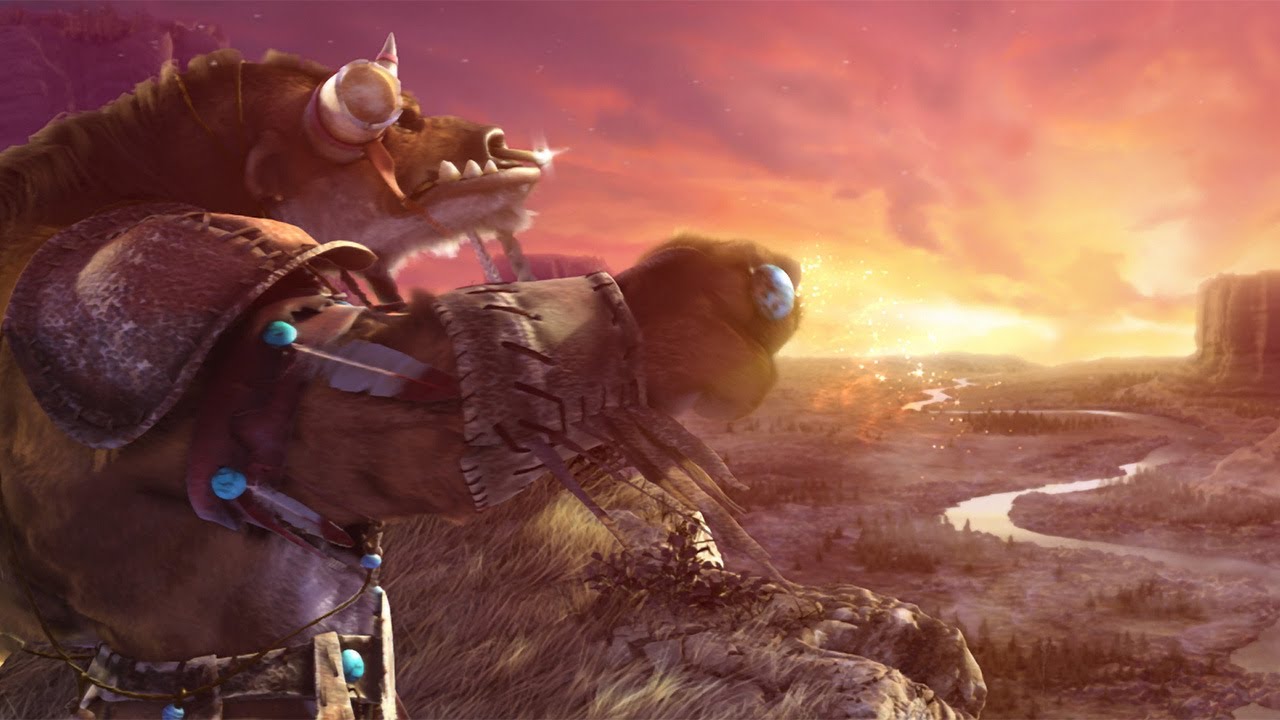
Before World of Warcraft launched, Azeroth was already familiar to people who had played Warcraft III. But on November 23, 2004, they were about to see it from a completely different angle—not from high above a battlefield, but through the eyes of a single adventurer. The original opening cinematic explained that change in less than three minutes and with only a few lines of narration.
The film begins with a reminder: four years have passed since the mortal races joined forces against the Burning Legion. Azeroth was saved, but the fragile pact between the Horde and Alliance has faded, and the drums of war sound once more. Then the cinematic makes its most important choice. It does not introduce a king, a commander, or a central villain. It shows the people the player might become.
Players, not famous heroes
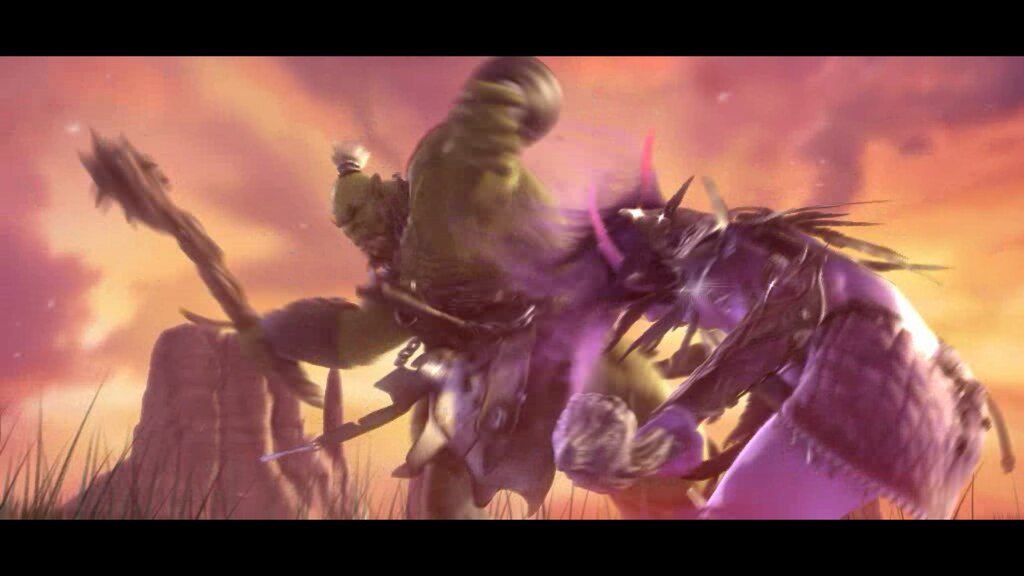
A dwarf hunter crosses the snow beside his bear. A night elf changes into a panther. A tauren calls upon the elements in Mulgore, an orc prepares his weapon, a Forsaken warlock summons an infernal, and a human mage gathers fire in her hands. By the final shots, a calm tour of Azeroth has become a battle.
That approach was not inevitable. In The WoW Diary, original level designer John Staats recalled that Chris Metzen had argued for a creation story about the Titans and the origins of the Warcraft universe. The final film instead focused on races and player archetypes. For an MMORPG, it was a remarkably precise decision: the audience was not told whom to follow. It was invited to choose who to be.
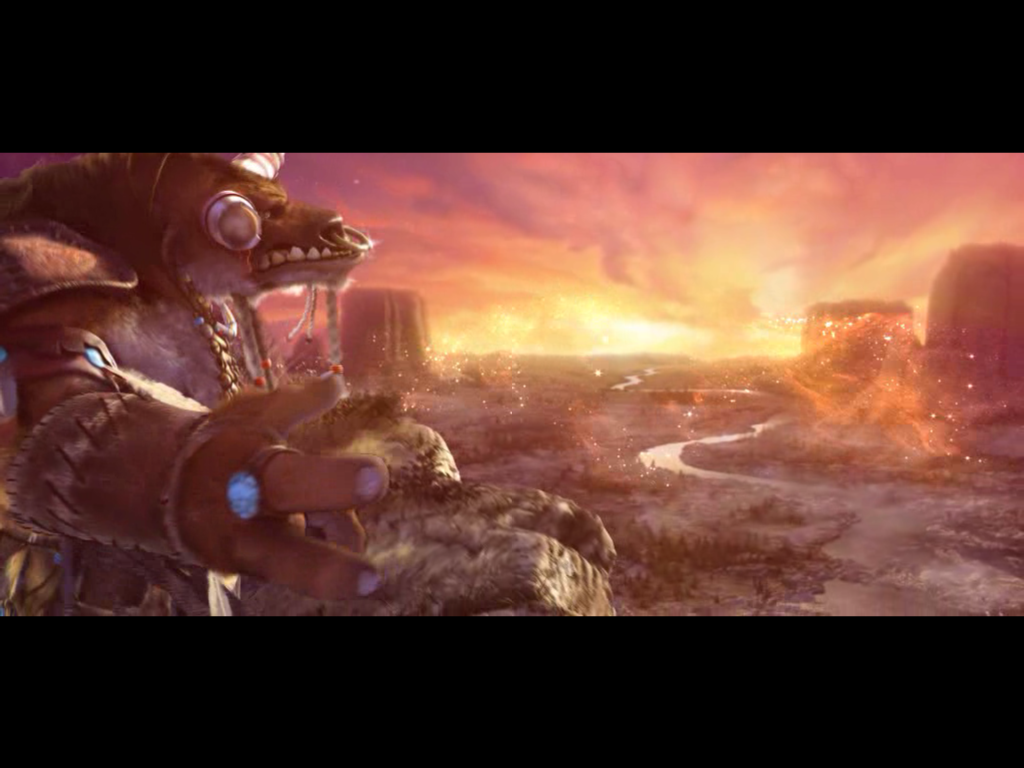
The film does not include every launch race or class. Instead, it selects combinations that read instantly: the bear explains the dwarf’s profession, shapeshifting identifies the druid, and the ritual above Mulgore connects the tauren to shamanism. Each scene works like a character-creation screen without menus.
A small team working very late
Matt Samia was the cinematic’s director and writer, with Scott Abeyta as producer. The original manual names artists including Jonathan Berube, Nick Carpenter, Jeff Chamberlain, and Fausto De Martini, plus a technical team and render-farm supervisor.
Chamberlain remembered joining Blizzard’s cinematic department as its eleventh member. Unlike a modern studio divided into specialties, those artists were generalists: one person might model, rig, animate, add effects, and light a shot. He recalled nights lasting until two or three in the morning as the team learned new techniques together. A major project could occupy the small group for years.
Building a world in 3ds Max
The intro was created with Autodesk 3ds Max, using a pipeline Blizzard adapted to the film. Fur, snow, cloth, fire, and the druid’s transformation had to work at a time when such effects required far more manual experimentation. Autodesk later highlighted the cinematic as an example of a customized pipeline built for a punishing schedule.
The soundtrack had an equally important job. Jason Hayes, the game’s lead composer, had first approached Blizzard in a wonderfully pre-streaming way. At the 1998 Game Developers Conference, he carried a portable CD player and persuaded people at company booths to listen to his work through headphones. A Blizzard representative was too busy at first, so Hayes returned near closing time and finally played the demo. His later connection with audio director Glenn Stafford helped bring him into the studio.
In the finished cinematic, music and sound move with the images: quiet wind and footsteps become drums, roars, gunfire, and an orchestral rush. There is little exposition because every sound helps sell the same promise—the world continues beyond the edge of the screen.
A film remembered through characters
The cinematic appeared online in early November 2004, shortly before the North American launch on November 23. Demand immediately exceeded expectations. Blizzard reported roughly 240,000 copies sold in the first 24 hours, more than 200,000 accounts created, and over 100,000 simultaneous players by that evening. Extra realms were ready, but the company still had to expand capacity rapidly.
Player memories reveal another kind of impact. Again and again, veterans say they created a dwarf hunter because of the bear, or chose a night elf druid after watching the transformation. The film did not merely advertise classes; it fixed certain race-and-class pairings in the visual memory of World of Warcraft.
Later WoW cinematics would center on Arthas, Deathwing, Garrosh, Sylvanas, or Anduin. The original intro did something different. Its heroes had no names. They were strangers standing at the beginning of an adventure, just like the people waiting for the installation to finish. That is why the film still feels less like the prologue to one plot and more like an open door. Beyond it was a world where the player would write the story.
Sources
Official World of Warcraft Cinematic Trailer: Official World of Warcraft source
Original World of Warcraft manual and cinematic credits: Official World of Warcraft source
Jeff Chamberlain interview: Official World of Warcraft source
The WoW Diary by John Staats: Official World of Warcraft source
Jason Hayes interview: Official World of Warcraft source
World of Warcraft launch figures: Official World of Warcraft source