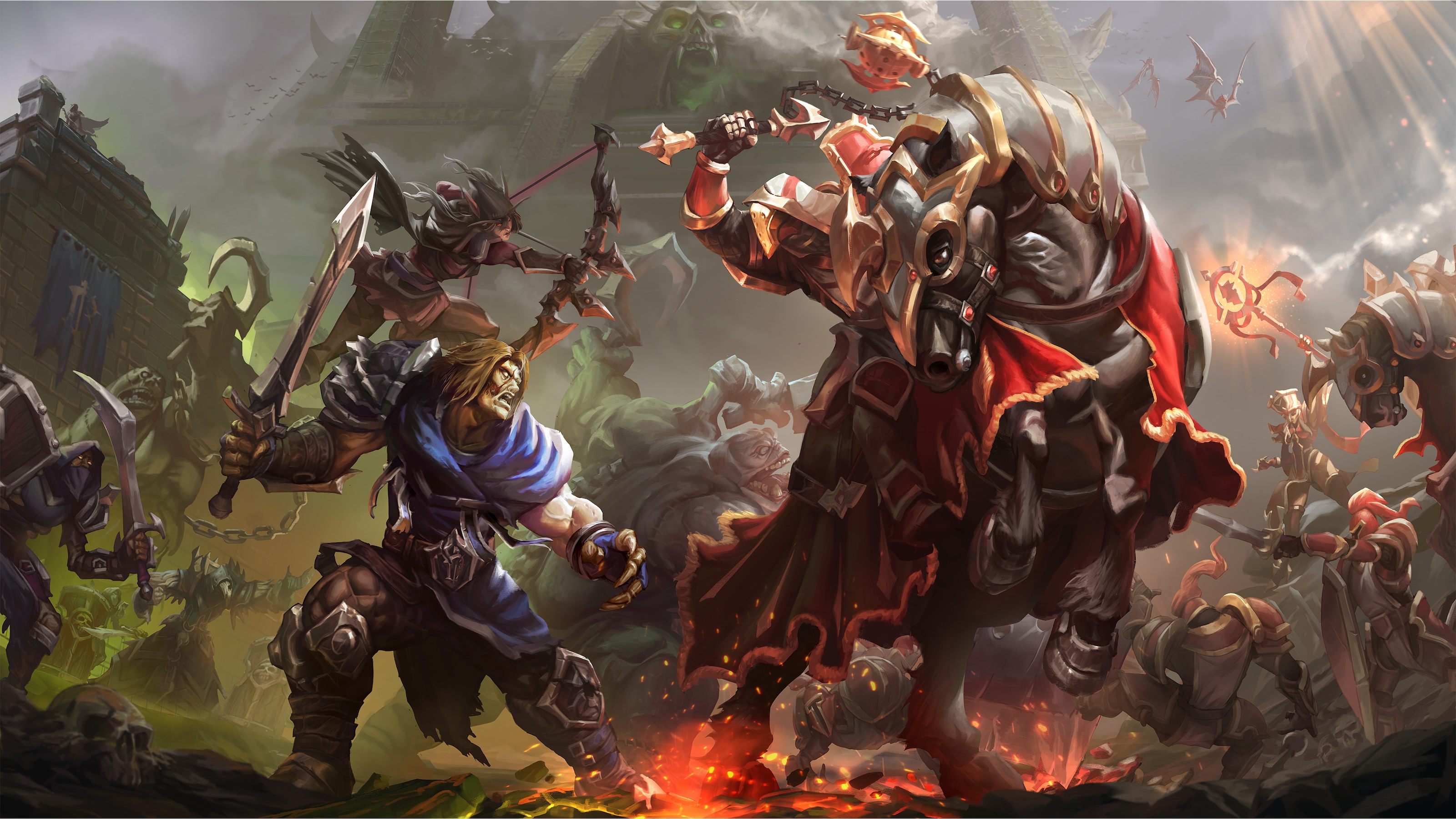
For twenty-three years, the final word on Warcraft III was The Frozen Throne. Its campaigns ended with Arthas ascending the Frozen Throne, Illidan defeated, and Sylvanas claiming the ruins of Lordaeron for the free undead. The next time players entered that world, it was already an MMO: the Undercity existed, the Forsaken belonged to the Horde, and the political map of Azeroth had quietly rearranged itself.
Warcraft III: Reforged — Forsaken Kingdom has arrived to fill that missing page. Blizzard announced it during the BlizzCon opening ceremony on *September 12, 2026 and released it the same day on Battle.net. It is the first official new Warcraft III campaign since The Frozen Throne* in 2003, a surprise expansion for a remaster whose 2020 launch remains one of the most bruising chapters in Blizzard’s recent history.
The result is more interesting than a conventional nostalgia package. Forsaken Kingdom begins as recognisable Warcraft III, opens into an RPG campaign inspired by The Founding of Durotar, and ends at the threshold of World of Warcraft: Forever. It is both a new story and an argument for what the old RTS can still become.
The announcement that was also a release
There was no long marketing runway. Blizzard revealed Forsaken Kingdom at BlizzCon 2026 and immediately put it on sale for *$29.99. The campaign requires Warcraft III: Reforged* and, in the Reforged client, a Battle.net account and internet connection.
The paid expansion contains two connected campaign experiences. *The Last Days of Lordaeron is a four-mission prologue. The main Forsaken Kingdom* story is divided into three chapters and adopts a much less linear structure. Blizzard advertises more than 30 hours of campaign content in total, though the real length will depend heavily on how many optional quests and corners of its maps a player explores.
Alongside the expansion, every Reforged owner received the free *3.0 update*. That distinction matters: the new campaign is paid, while Definitive Edition graphics, the Forsaken Paladin tavern hero, the 24-unit selection limit, interface changes, new servers, visual improvements and major World Editor additions belong to the base-game update.
From the death of Lordaeron to the birth of the Forsaken
The prologue returns to the day Arthas came home from Northrend and murdered King Terenas. Instead of replaying that famous scene through Arthas’s eyes, it follows a new human hero, Lordaeron guard lieutenant *Garek Bandarion*. His attempt to save a kingdom that the audience already knows is doomed carries the player through a besieged Andorhal and the ruined streets of Stratholme toward a confrontation with Baron Rivendare.
That perspective is the prologue’s smartest idea. Classic Warcraft III shows the fall of Lordaeron as part of Arthas’s transformation. Forsaken Kingdom shows what the same catastrophe meant to the soldiers and civilians left behind. Garek’s defeat is not the end of his story: raised into undeath but freed from the Scourge, he becomes one of Sylvanas Windrunner’s Forsaken—and eventually Warcraft’s first Forsaken Paladin.
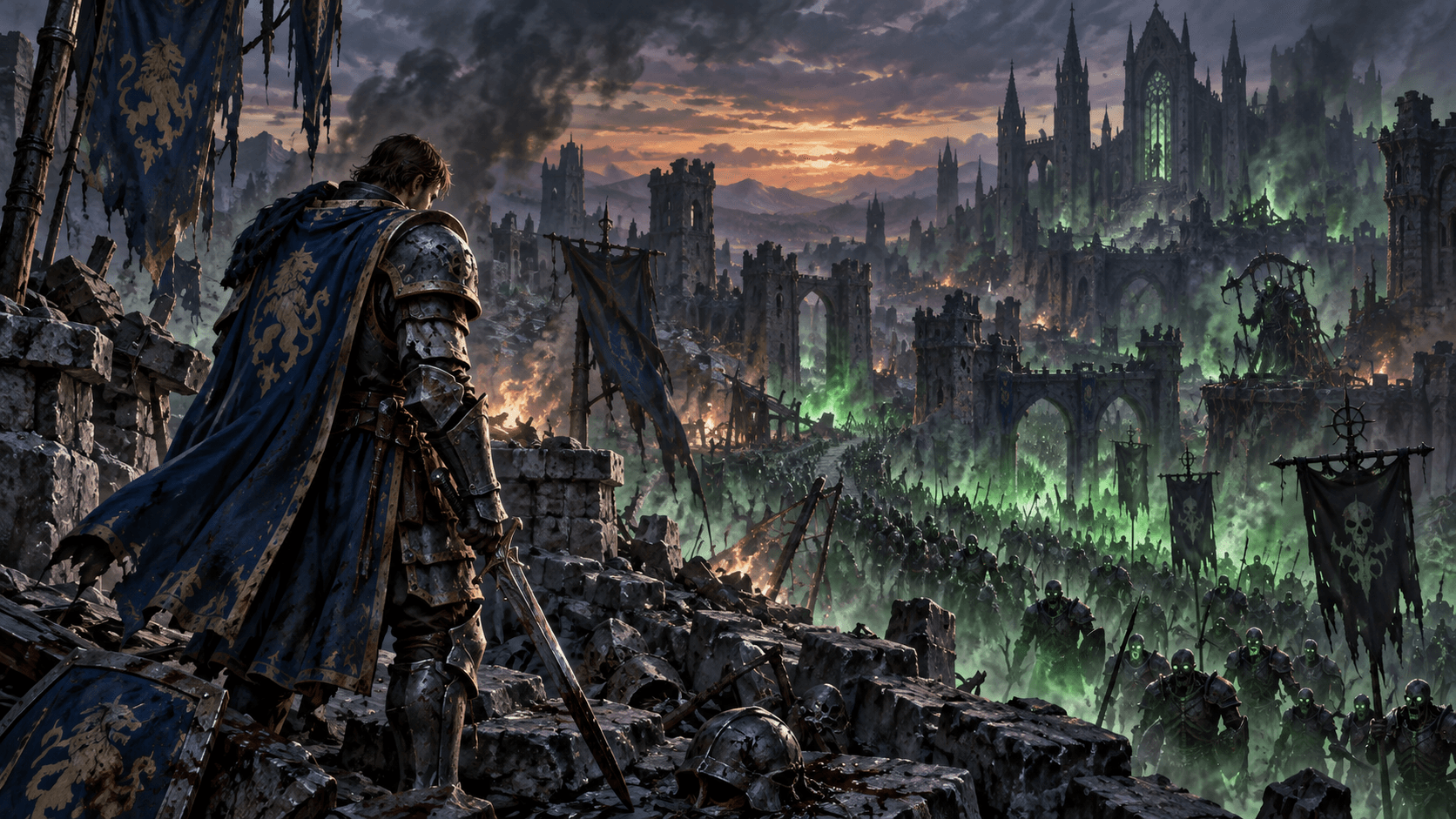
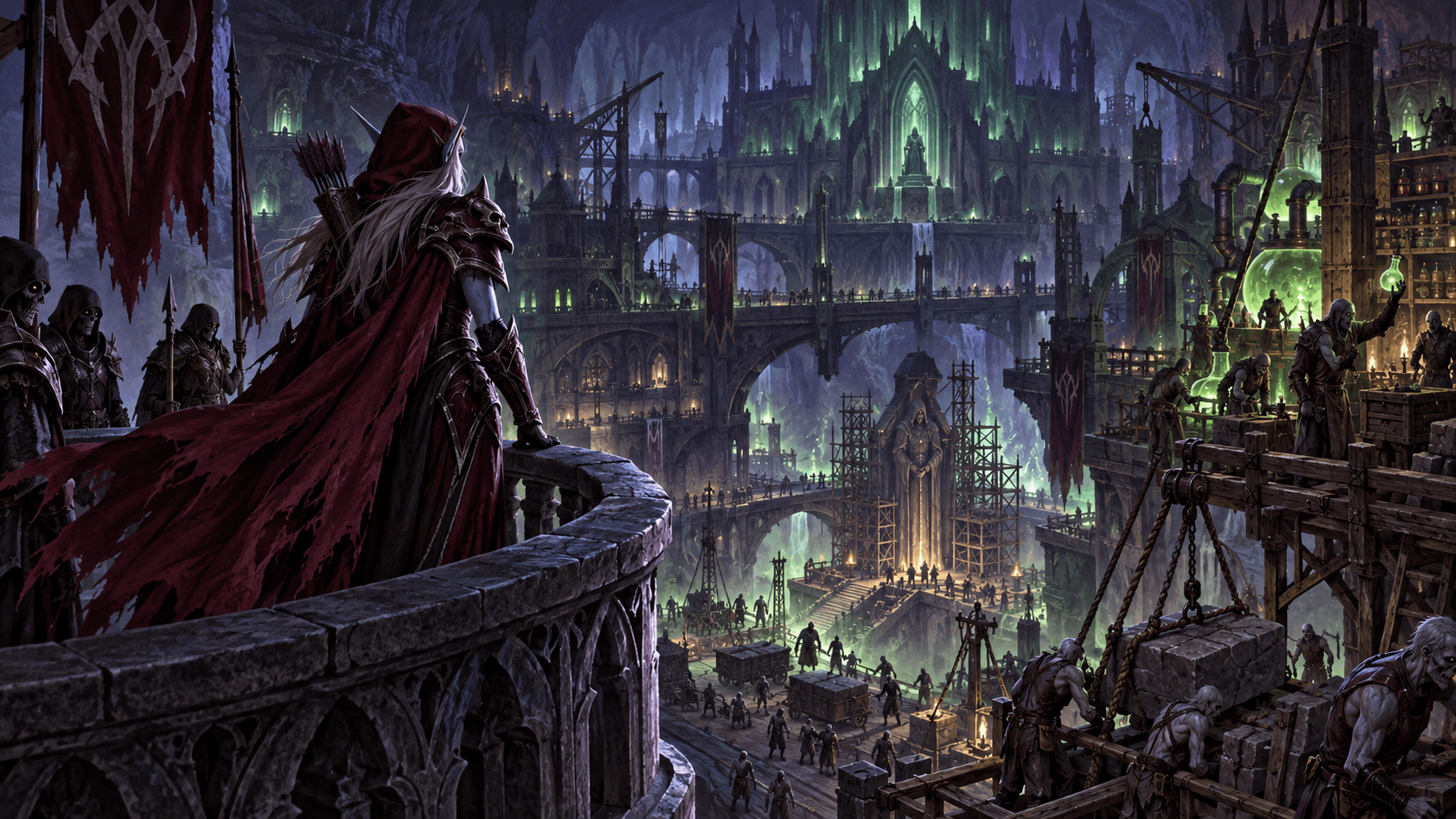
The main campaign then moves beneath the capital ruins. Garek and the Dark Ranger Anya serve Sylvanas while the free undead fight to secure the Undercity, survive pressure from the Scourge and Scarlet Crusade, and turn a collection of traumatised survivors into a kingdom. Familiar names such as Putress appear before their later roles in World of Warcraft, while the shadow of Naxxramas explains why victory over the dreadlords did not make the Plaguelands safe.
Blizzard is not merely adapting quests from the MMO. It is dramatizing the institutional birth of a faction: how the Forsaken acquire a home, leaders, weapons and a reason to continue existing after breaking the Lich King’s control.
It is not a second Frozen Throne
The four prologue missions are deliberately traditional. They use base building, unit production and scripted objectives, but repeatedly bend the formula. IGN’s early review singled out an Andorhal battle in which captured towers generate allied waves—a light MOBA influence—and a post-purge Stratholme mission that divides the player’s forces into two groups whose actions open routes for one another.
The main campaign changes genre emphasis. It uses a *soft open-world RPG structure modeled on Rexxar’s bonus campaign from The Frozen Throne*. Large spaces contain quests, characters and optional objectives; heroes persist, gather equipment and develop across the journey. A new inventory adds dedicated gear slots, and hero kits and talent choices create more room for character-building than the classic six-slot inventory and four-ability template.
This is the clearest difference from the original game. Classic Warcraft III alternates between tightly authored RTS missions: construct a base, gather resources, build an army, destroy or defend a target. Forsaken Kingdom still understands that language, but its main act is more interested in exploration, party composition, loot and long-form progression. Players who loved The Founding of Durotar may see the obvious evolution of an old idea. Purists who want three chapters of conventional base warfare may feel that Blizzard has made an RPG inside an RTS engine.
Three visual versions of the same classic
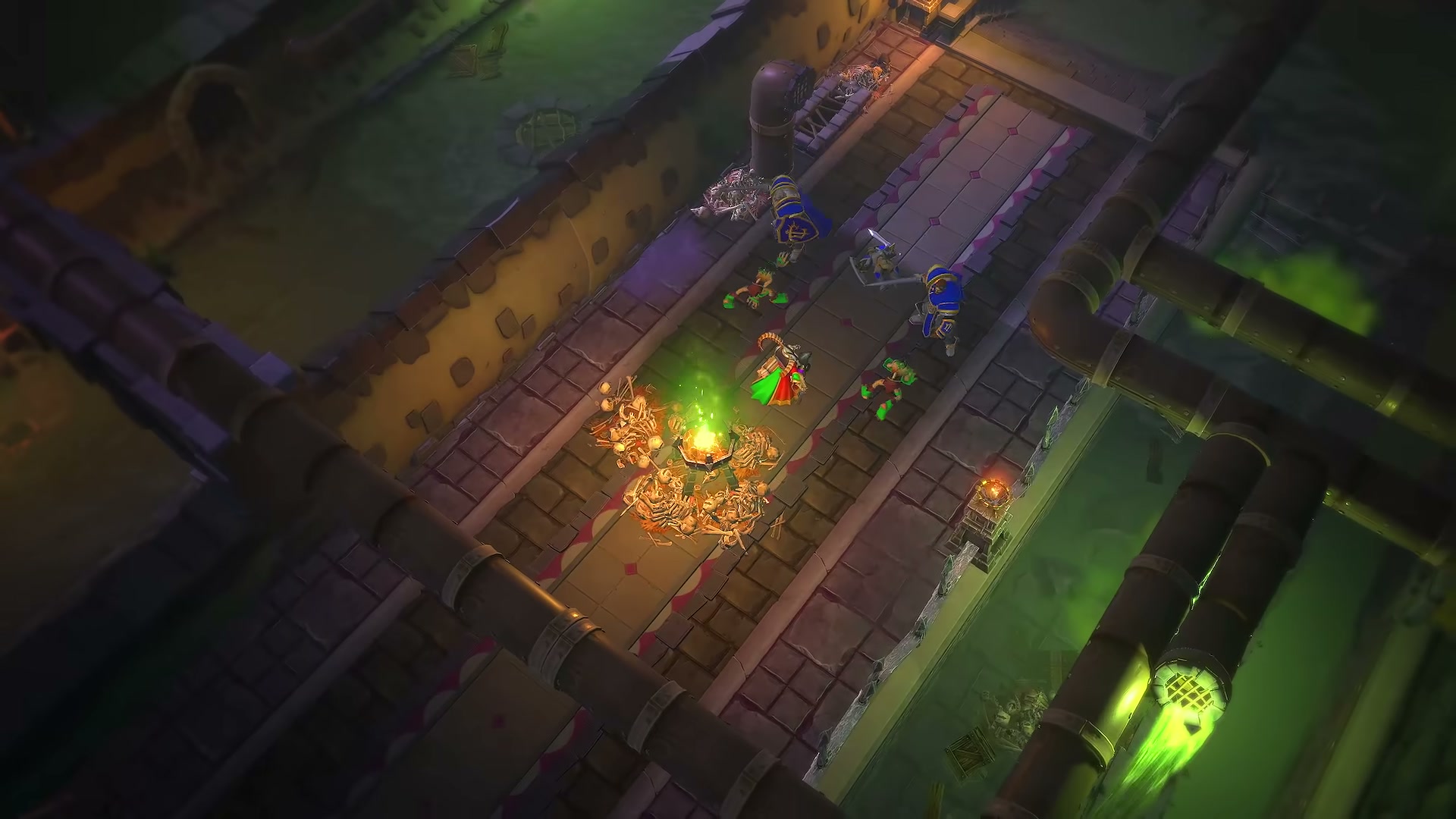
Patch 3.0 replaces the old Classic HD option with *Definitive Edition*, a third graphics mode alongside Classic and Reforged. Its goal is to preserve the original game’s large silhouettes, bright team colours and instant battlefield readability while increasing model detail, lighting quality and environmental depth.
The choice is an implicit answer to Reforged’s most persistent visual problem. Its high-detail 2020 models often looked attractive in isolation but were harder to parse in motion than the exaggerated 2002 designs. Definitive Edition moves back toward the old proportions. From the normal strategy camera, units look like a sharpened version of memory rather than a replacement art style.
The solution is promising but uneven. IGN found close-up textures and cinematics flatter than expected, while praising the way units remain readable during a fast skirmish. There is also an awkward compatibility split: multiplayer and skirmish allow Classic, Definitive and Reforged modes; the original Reign of Chaos and Frozen Throne campaigns still offer Classic or Reforged; Forsaken Kingdom itself uses Definitive Edition. Blizzard has built a compelling middle path without yet extending it across the whole package.
The maps benefit most. Overhauled fog, lighting, water, vertical terrain and day-night transitions give Lordaeron scale without sacrificing the board-game clarity of Warcraft III. The same lighting and environment tools are now available to custom-map authors through the upgraded World Editor, potentially making patch 3.0 as important to creators as the paid campaign is to story players.
The first new multiplayer hero in two decades
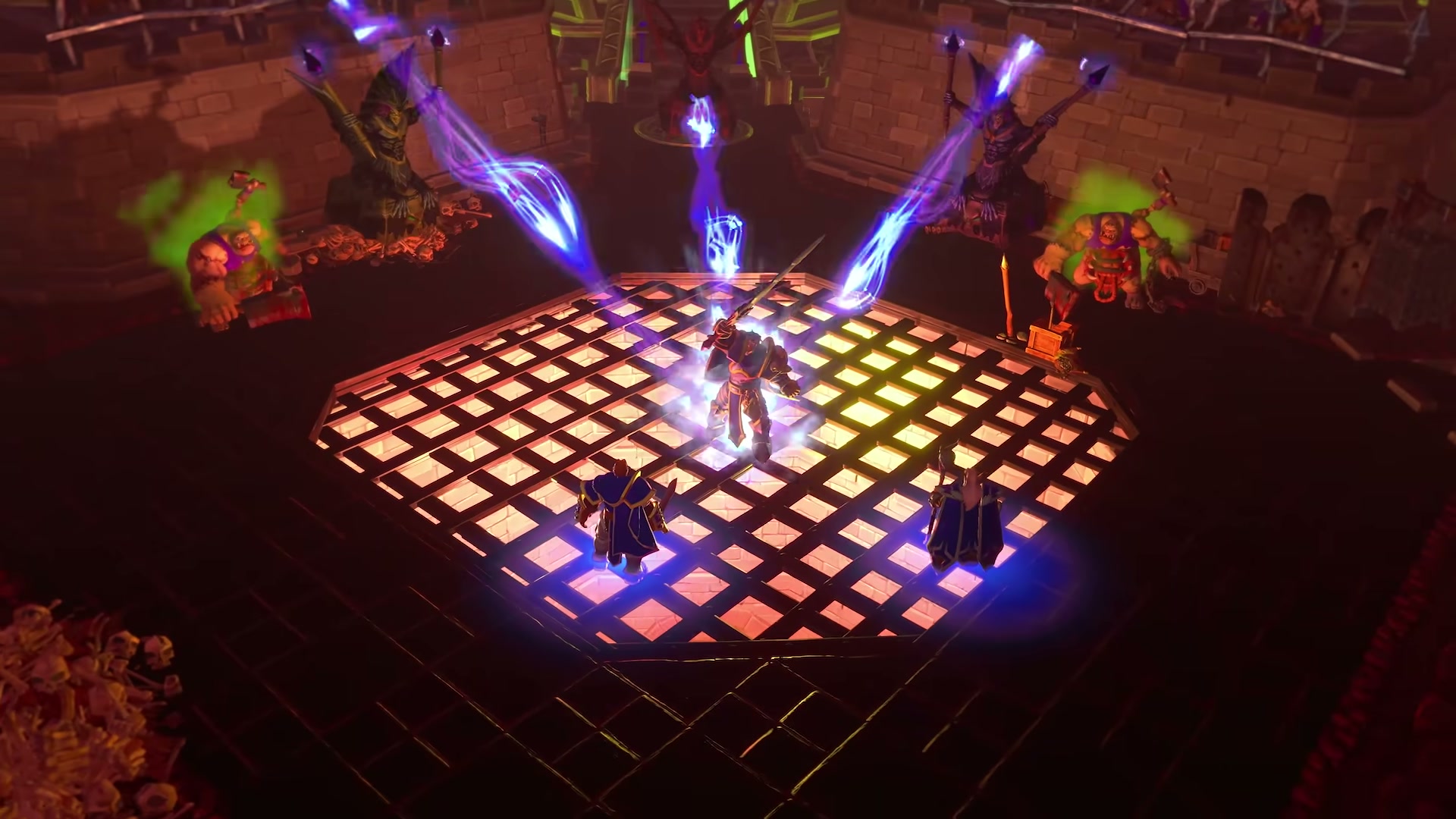
The *Forsaken Paladin* is more than a campaign protagonist. Patch 3.0 adds him to the Tavern as a neutral hero in all three visual modes—the first new Tavern hero since the Firelord and Alchemist arrived in 2004.
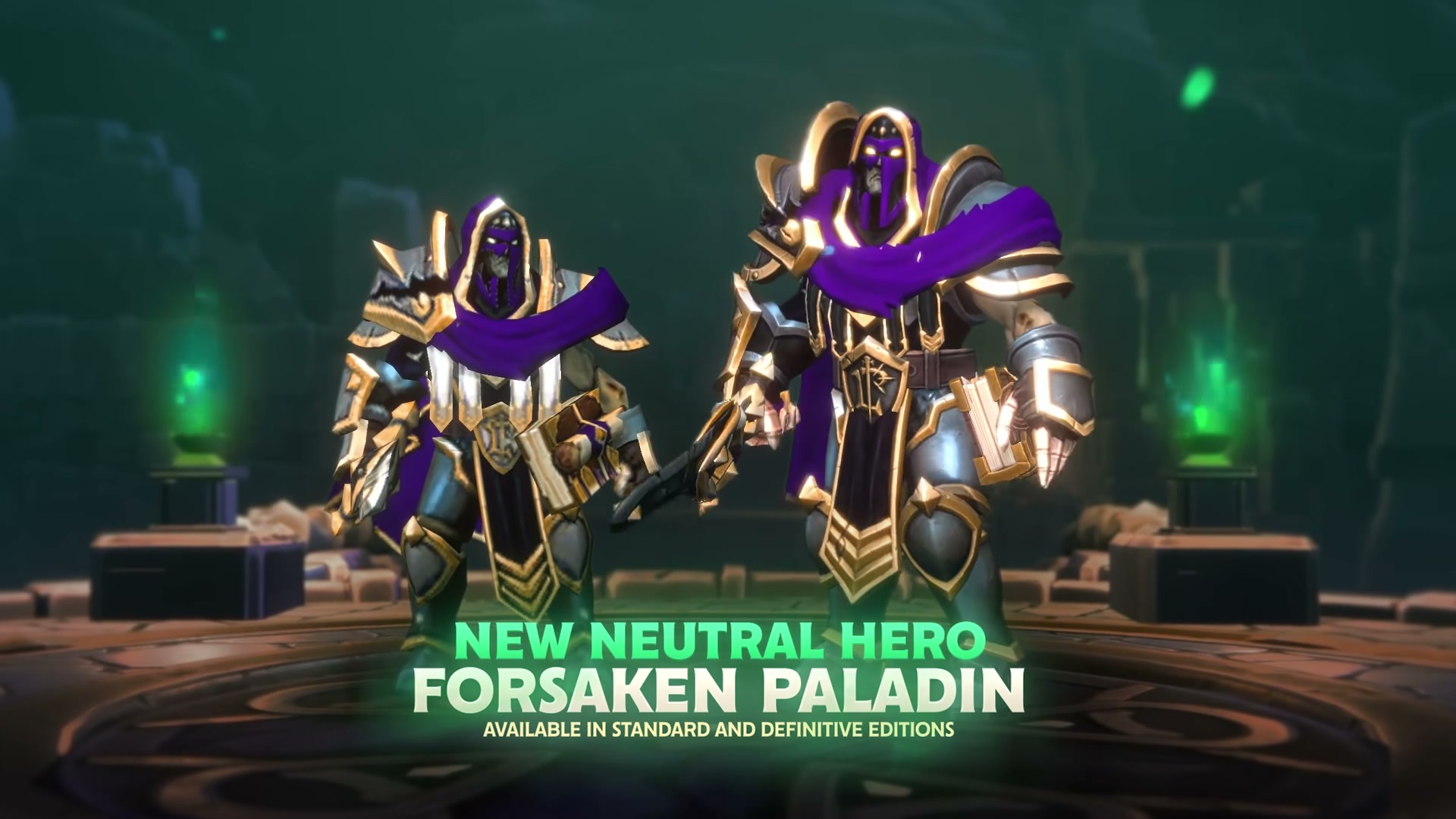
His design deliberately complicates Warcraft’s old moral geometry. The Human Paladin channels the Light; the Death Knight was created as his undead opposite. Garek is both. He is a Strength melee hero whose Righteous Fury turns movement into an attack, while Sacred Aura reduces magic damage for nearby allies. Consecration heals living allies and damages enemies but does not heal friendly undead, an irony that makes him less straightforward for an Undead army than his identity suggests. His ultimate, Cleansing Fire, combines healing, buffs, dispelling, stunning and heavy damage to summons.
Together with the increase from 12 to 24 selected units, he creates real multiplayer consequences. The larger control group reduces mechanical friction for newcomers but also changes a limitation around which veterans have built habits for more than two decades. This is not a balance patch pretending to be an expansion; it is Blizzard cautiously touching systems that once seemed untouchable.
Why this is the prologue to World of Warcraft: Forever
The bridge to World of Warcraft: Forever is not a vague marketing association. Blizzard explicitly places Forever *after the events of Forsaken Kingdom and before Molten Core*. The two releases therefore form a continuous handoff: the RTS explains how Lordaeron’s free undead become a functioning power, and the MMO begins once that reshaped world is ready for player characters.
That solves a structural problem inherited from 2004. The Frozen Throne ends with Sylvanas naming the Forsaken, but original WoW begins after the Undercity, faction relationships and regional conflicts are already established. Forsaken Kingdom turns that off-screen transition into playable history. Garek’s path also prepares one of Forever’s headline changes: *Undead Paladins* are a playable race-and-class combination in the new MMO. What first appears as an eccentric neutral hero in the RTS becomes proof that undeath and the Light can coexist in Forever’s version of Azeroth.
More importantly, the campaign defines the point at which history is allowed to diverge. Forever is not a server that will repeat every expansion in order. It returns to level 60 Azeroth, preserves the original continents, and develops new regions, dungeons and storylines along an alternate path. Forsaken Kingdom is the hinge: it closes a gap in the old timeline while quietly establishing new characters and possibilities that the 2004 game never contained.
In practical terms, Blizzard is using one genre to establish the world of another. The RTS can show armies, collapsing kingdoms and the strategic struggle for territory. The MMO can then let thousands of players live inside the consequences. Buying both is not required—Forever is included with WoW subscription or game time—but the paired releases encourage players to experience the history before entering its aftermath.
First reactions: excitement with an old wound underneath
The first professional impressions are broadly positive but necessarily incomplete. IGN’s review-in-progress covered the full prologue and the opening hours of the main campaign. It praised the return of Blizzard’s single-player RTS storytelling, the inventive prologue missions and the way the larger campaign preserves classic Warcraft’s feel while experimenting with RPG systems. The publication withheld a final score until its reviewer could finish the roughly 30-hour story.
PC Gamer framed the surprise launch as a remarkable return after 23 years and suggested it could help rehabilitate Reforged. Yet the same outlet quickly identified the release’s most self-inflicted controversy. Patch 3.0 makes the Reforged client always-online—even for the campaign—and removes LAN play. Blizzard says offline and LAN remain available through the separate legacy Classic client, but Forsaken Kingdom belongs to Reforged. For a new single-player expansion to a game born in the LAN-party era, that restriction feels particularly hostile.
Early community discussion follows the same split. Players praise the ambitious maps, in-engine cinematics, story references and the unexpected generosity of a long campaign. Criticism focuses on the $30 price, bugs and difficulty spikes, the uneven close-up presentation, and the main campaign’s preference for hero-driven RPG play over traditional base-building. The enthusiasm is real; so is the suspicion created by Reforged’s broken promises in 2020.
Early verdict
Forsaken Kingdom does not erase the launch of Reforged, and patch 3.0 introduces new problems even as it fixes old ones. Definitive Edition should exist across every campaign. A premium single-player story should not require a permanent connection. LAN support should not be exiled to another client.
But the expansion succeeds at the harder creative task. It finds a reason for Warcraft III to exist again as more than preserved software. The prologue revisits familiar tragedy from the ground, the main campaign expands the game’s forgotten RPG branch, and the Forsaken Paladin gives both story and multiplayer a genuinely new idea. Most of all, the campaign makes the twenty-two-year jump from The Frozen Throne to World of Warcraft feel like a road rather than a cut.
As an early review, the recommendation comes with conditions. Come for classic RTS missions and you may find too much RPG. Come for a clean redemption story and the always-online requirement will sour it. Come to see how the Forsaken built their kingdom—and why Azeroth is about to split into a new Forever timeline—and this is the missing Warcraft chapter Blizzard should have told years ago.
Sources
Blizzard Entertainment, *Wage War Once More with Warcraft III Reforged: Forsaken Kingdom*
Blizzard Entertainment, *Forsaken Kingdom Deep Dive Recap*
Blizzard, *Warcraft III: Reforged — Forsaken Kingdom Patch Notes, Version 3.0.0*
Blizzard Entertainment, *Carve a New Path with World of Warcraft: Forever*
IGN, *Warcraft 3 Reforged: Forsaken Kingdom Review So Far*
PC Gamer, *Blizzard just dropped a new Warcraft 3 campaign, the first in 23 years*
PC Gamer, *Warcraft 3: Reforged adds always-online requirement, removes LAN mode*