
Warcraft remembers the warriors at the gate and rarely the wagon that brought their arrows. Yet the Horde has crossed oceans, deserts, frozen continents, and even worlds. None of those campaigns could survive on courage alone. Read together, the games’ quests, buildings, and background details reveal a surprisingly consistent system—and explain why cutting a supply line can matter more than defeating another regiment.
A capital built inside a resource problem
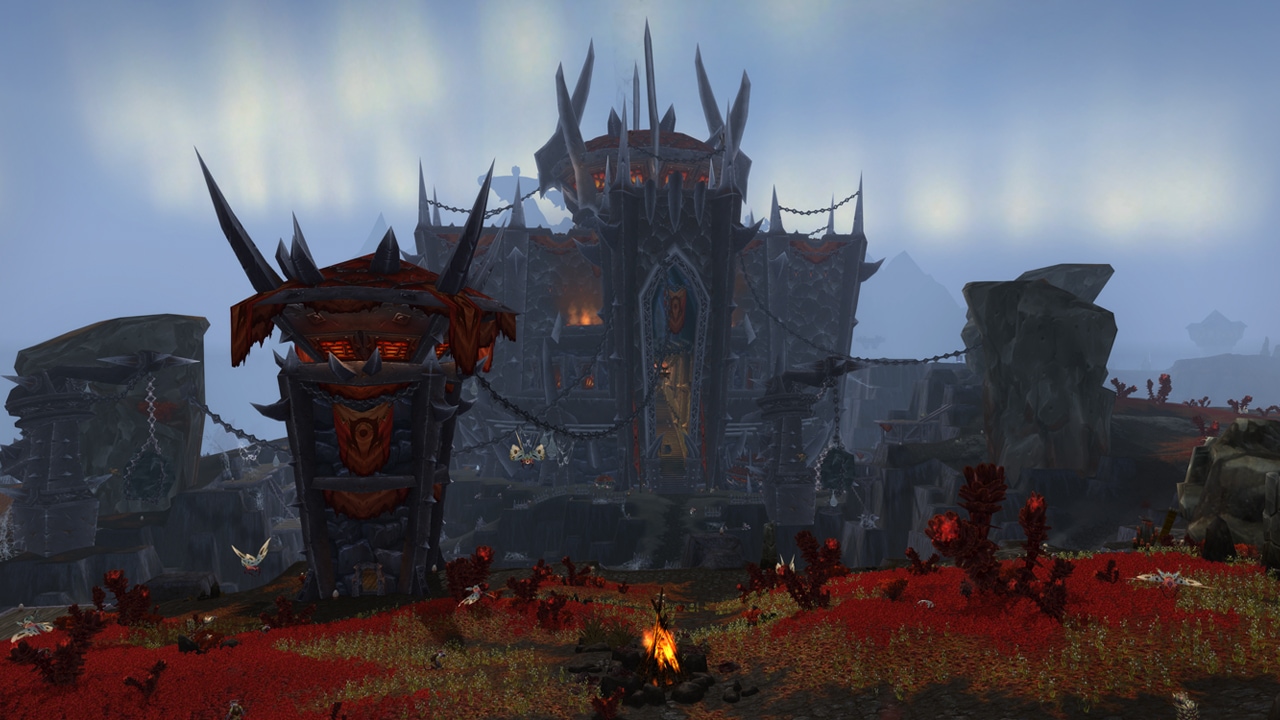
Orgrimmar’s location defines Horde strategy. Durotar gave Thrall’s people a defensible homeland, but not an easy one. Blizzard’s own guide describes the region as parched and says its natural resources were nearly depleted by the Cataclysm era. The city therefore sits close to the forests of Ashenvale, the roads of the Barrens, and the sea not merely for convenience. It depends on them.
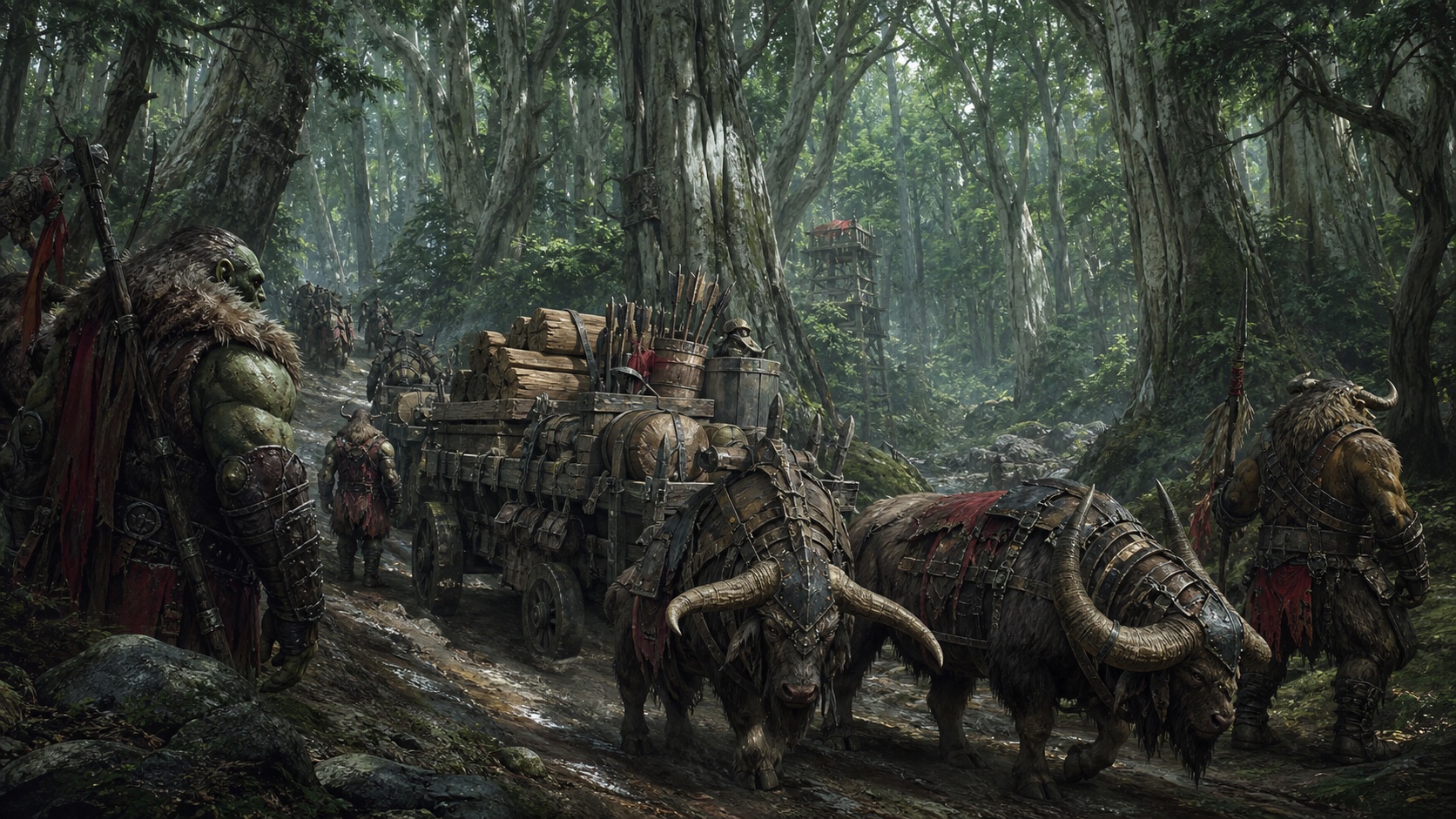
That dependence helps explain why lumber camps and border posts recur in Horde stories. Timber becomes shelter, fuel, carts, ships, and siege machinery. In Ashenvale, players recover arrows, carry wood from the Warsong Lumber Camp, and escort kodo caravans toward besieged positions. These humble assignments show what the front consumes.
Wars begin in warehouses
Robert Brooks’s official novella A Good War offers the clearest look at Horde mobilization. Preparing the supposed march to Silithus requires food, merchant carts, nonstop work from blacksmiths, and supplies sufficient to feed half the army for a year. The quartermaster asks for two months and receives one. The deception succeeds because military logistics are so visible that Alliance spies can estimate Horde intentions by watching workshops and cargo.
The later advance through Ashenvale protects its routes and establishes coastal positions before the final push. Strategy here is not simply choosing where soldiers fight. It is choosing what story the movement of grain, metal, and wagons tells the enemy.
Blizzard used the same principle during Garrosh Hellscream’s downfall. The Patch 5.3 campaign identified reinforced supply lines through the Barrens as the machinery feeding his forces in Orgrimmar. Players had to raid those lines before the capital could be challenged. The lesson was unusually direct: a fortress is only as strong as the territory that provisions it.
Hooves, sails, and propellers
The Horde does not possess one perfect transport system. It layers several imperfect ones. Roads and kodo caravans carry bulky cargo inland. Ships move armies between coasts. Zeppelins connect distant strongholds without requiring paved routes. Portals provide extraordinary shortcuts, but the ordinary geography of the games still depends on docks, towers, flight masters, and guarded roads.
This tradition reaches back to Warcraft II. Its official manual calls the orc shipyard a vital link between clans scattered across Lordaeron. Transports carried troops, tankers delivered oil, and foundries turned ore into armor and cannons for the fleet. The Horde’s naval power was therefore an industrial chain: lose the oil route or the shipyard, and the juggernaut ceased to be a weapon.
The modern Horde expands that chain through its member peoples: goblin machines, tauren beasts and riders, Forsaken apothecaries, and blood elf magic each solve different problems. Its strength lies in combining capabilities across hostile environments.
Northrend: build the base before winning the war
The campaign against the Lich King turns logistics into landscape. Horde travelers reach Borean Tundra by zeppelin and arrive at Warsong Hold, the expedition’s main headquarters. The fortress is not an effortless prefab dropped into the snow. In-game accounts describe peons cutting a quarry into the tundra to obtain the stone for its walls and towers; a settlement grew along the road from the landing site to house the workers.
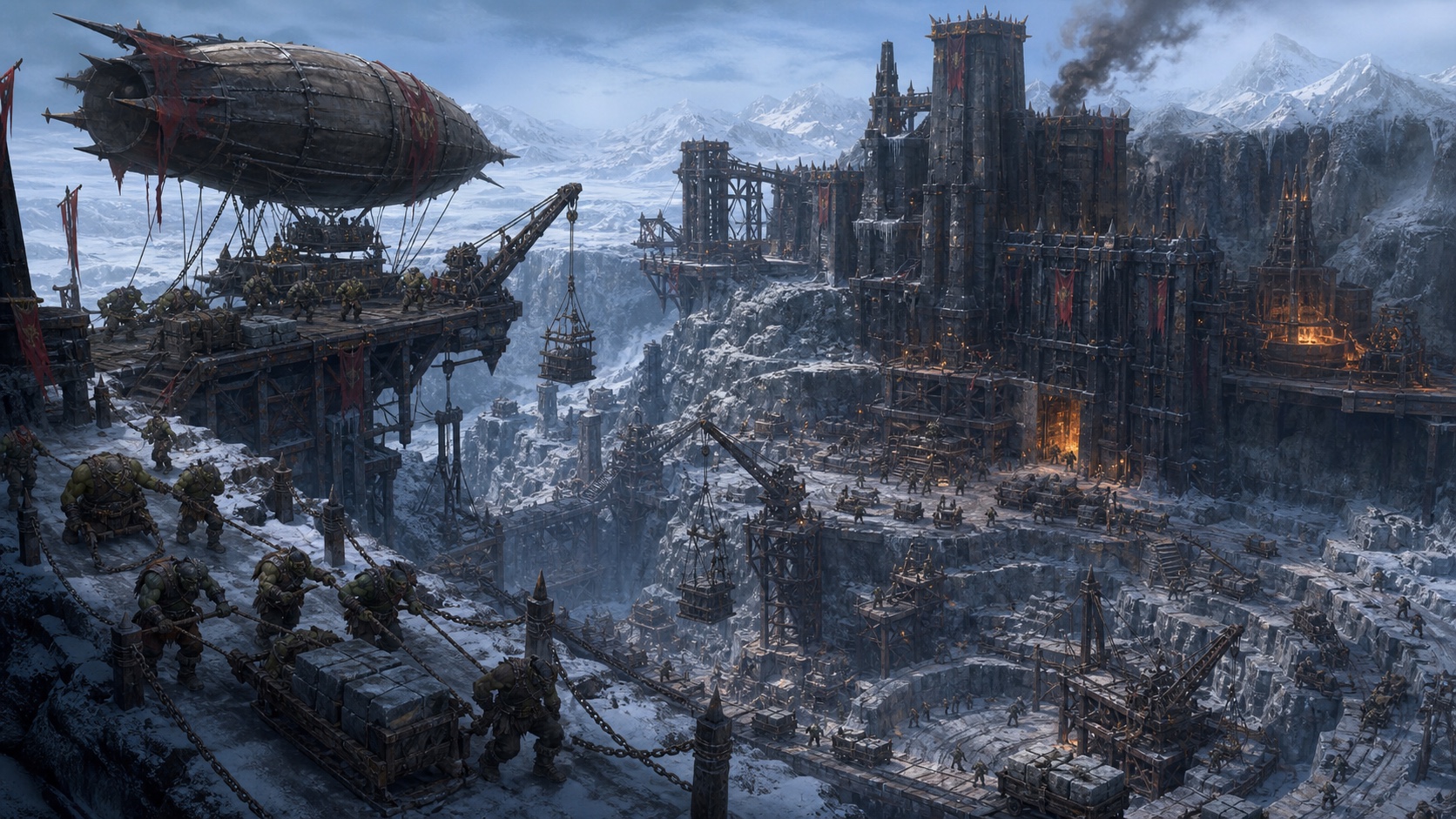
Shipping every block from Kalimdor would be absurdly expensive, so the expedition imports what it cannot replace and extracts heavy material locally. The zeppelin is the bridge, not the whole economy. Before the Horde can threaten Icecrown, it must create a small functioning society in Borean Tundra.
The hidden battlefield
Warcraft’s scale will never behave like a literal census. A few wagons on screen may stand for hundreds, and a zeppelin journey lasts minutes because the player, unlike the soldier, should not wait days. Logistics in Azeroth is therefore best read as narrative evidence rather than a complete simulation.
Even so, the pattern is clear. Horde offensives accelerate when roads, ports, labor, and local resources align. They stall when fleets are lost, routes are exposed, or political unity breaks the chain. The faction’s famous aggression is partly the behavior of a power whose capital began in a harsh land and whose wars are repeatedly fought far from home.
The grunt may win the cinematic moment, but the quartermaster determines whether the grunt reaches it. Behind every cry of “For the Horde” is a less glamorous promise: the arrows arrived, the forge stayed hot, and someone guarded the wagon through the night.
Sources
Robert Brooks, *A Good War* — official World of Warcraft novella
Blizzard, Orc Starting Zone guide
Blizzard, Patch 5.3 interview with Tom Chilton
Blizzard, *Warcraft II: Battle.net Edition* manual
Blizzard, Wrath Classic zone guide — official Warsong Hold screenshot
Warcraft Wiki, Warsong Hold — summary with in-game citations