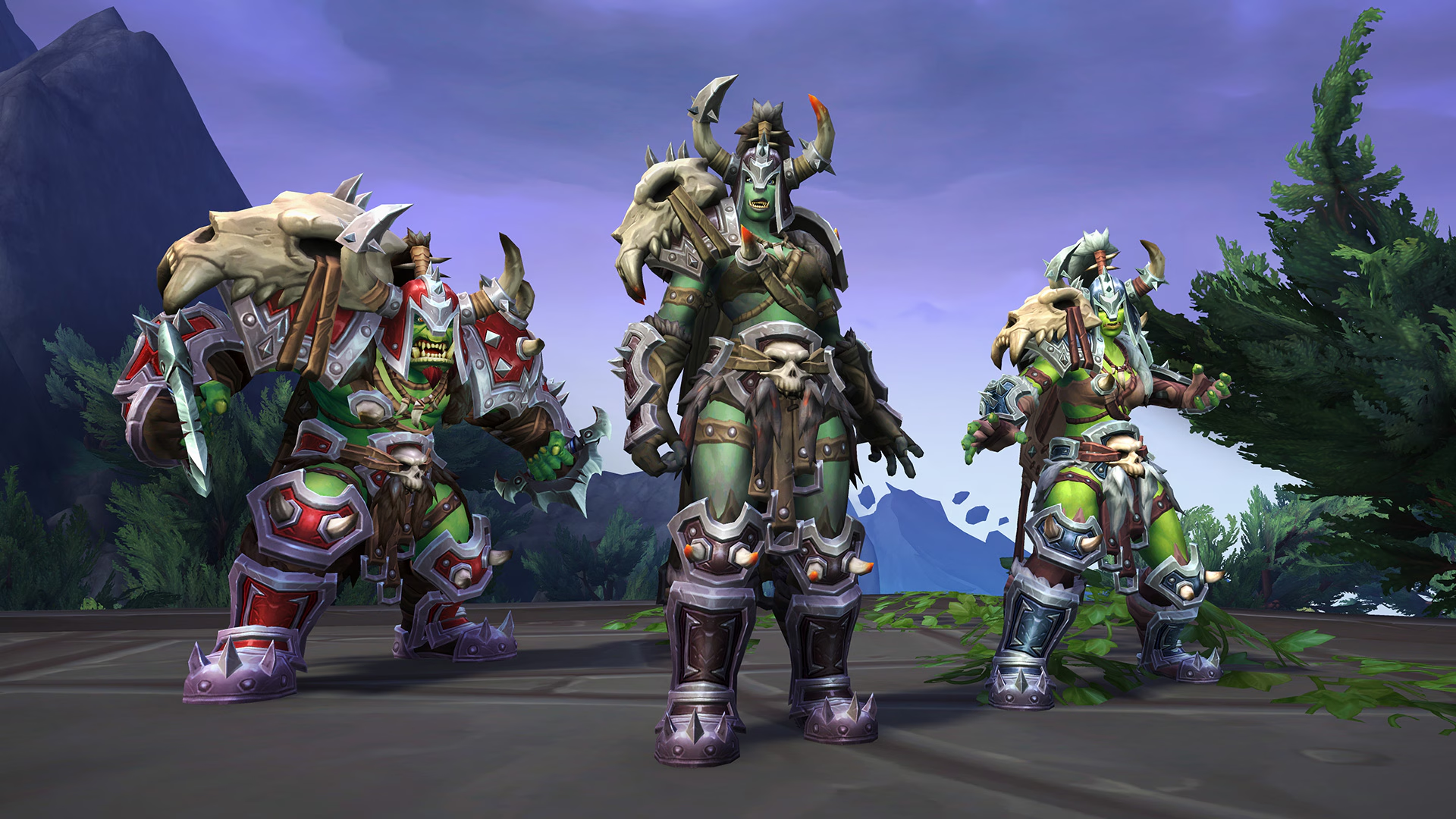
A World of Warcraft armor set starts telling its story before the player reads its name. At raid distance, where small details disappear, a strong silhouette can still say paladin, rogue, druid, or death knight. That instant recognition is one of the game’s quiet design achievements: equipment is not only a reward, but a readable portrait of the hero wearing it.
The silhouette comes first
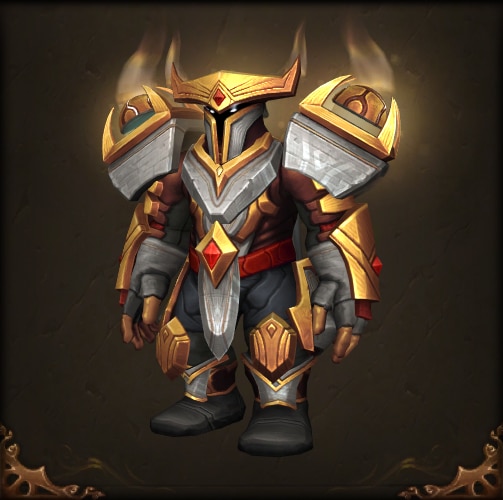
WoW has always favored bold shapes. Large pauldrons, tall helms, sharp collars, layered robes, and glowing weapons survive the game camera better than delicate realism. A paladin often looks broad, upright, and architectural, as if the armor were a moving cathedral. A rogue narrows the profile with masks, blades, and asymmetry. Druids borrow horns, feathers, bark, and leaves; death knights turn toward bone, frost, and heavy dark metal. These are tendencies, not fixed rules, but they let the eye identify a class before the first spell is cast.
Symbols make the fantasy legible
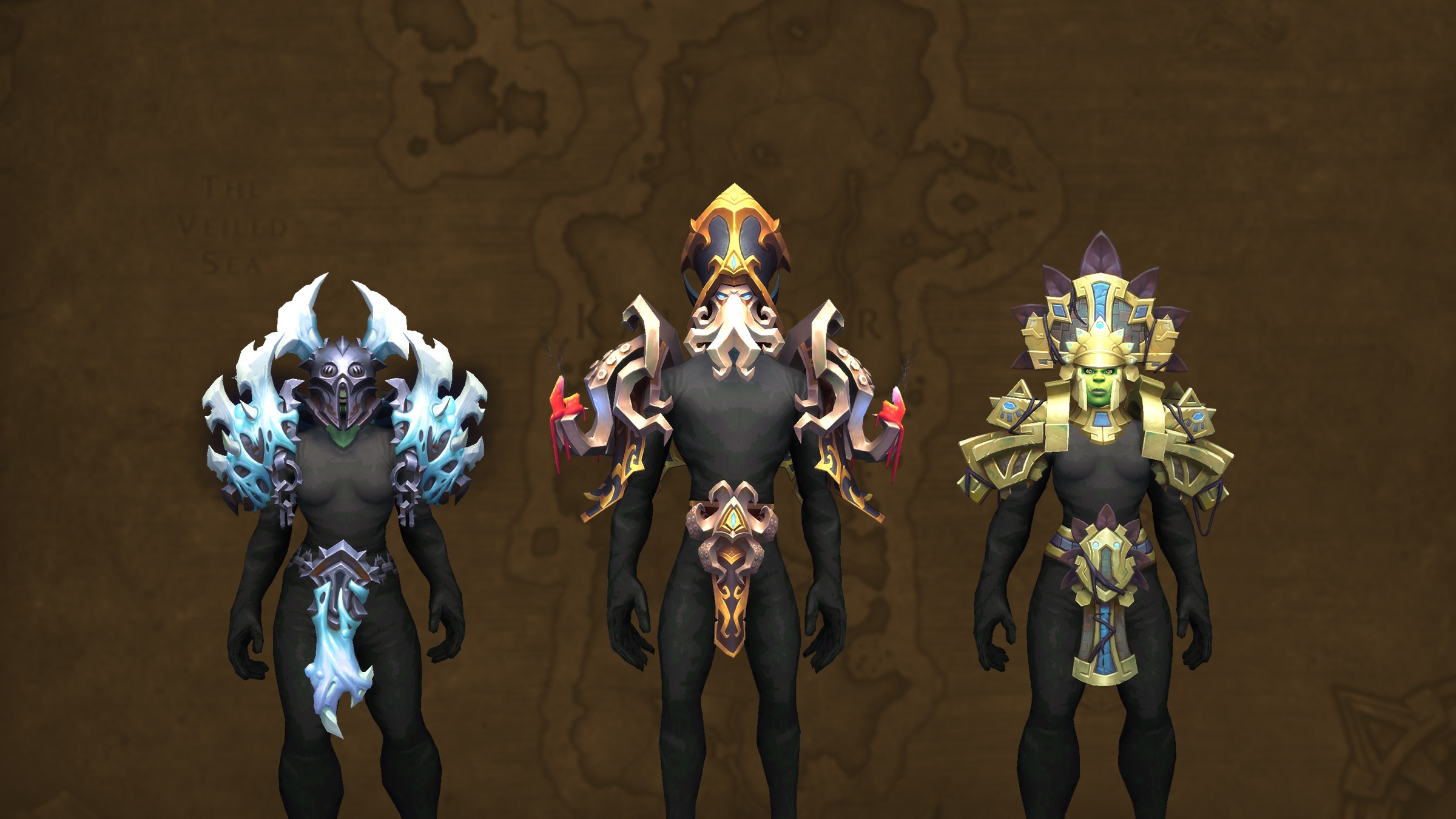
After the outline comes a visual vocabulary. Gold, white stone, sunbursts, and ordered geometry suggest the Light. Skulls, runes, chains, and cold blue light point toward death magic. Leaves and carved wood connect a druid to the natural world, while fel green, flame, horns, and unstable edges signal power that may be difficult to control. The best sets do not simply attach a class emblem to a chest piece. They repeat an idea across the helm, shoulders, belt, gloves, and effects until the whole figure speaks one language.
Blizzard has described Order Halls as an homage to class fantasy, and their unique armor appearances made that idea wearable. Later class-focused Trading Post sets continued the same principle in a lighter, collectible form. The setting can change, but the visual promise remains: a priest should feel like a priest, even when the armor is shaped by a new region or enemy.
From sketch to a moving object
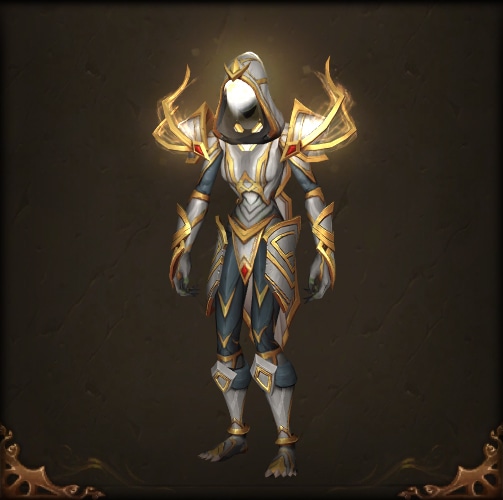
Concept art is where the team tests the big idea: the silhouette, the source of power, and the shapes that must be noticed first. The design then has to survive a harder test in 3D. It must fit many races and body types, look clear from behind during combat, and avoid collapsing into visual noise beside spell effects. Textures separate metal from leather or bone; color guides the eye; particles and animation add the final sense of life.
Artist Tamara Salatova’s World of Warcraft portfolio shows how connected those stages can be. Her armor work included concept art, modeling, texturing, effects, and animation. For an insect-inspired set, wings and moving parts were not decoration added at the end: they helped create the original silhouette and made the theme readable in motion. This is the point where a sketch becomes something that belongs in Azeroth.
A record of where the hero has been
Tier armor must express two identities at once: the class and the place where the set was earned. Sepulcher of the First Ones gear filtered familiar class language through the cosmic geometry of Zereth Mortis. Newer art for Midnight works with the Light, the Void, and the heritage of Quel’Thalas. A successful set absorbs the expansion’s mood without losing the class beneath it. That tension is why memorable tiers feel like chapters rather than costumes.
Transmog changed the ending of that story. Old armor no longer becomes invisible when its statistics expire. Players can combine pieces from different eras, preserve a famous silhouette, or rewrite it around their own character. Blizzard’s Sets interface and later class collections support this long memory. The legendary set is therefore not always the newest or rarest one. It is the one recognizable in shadow, rich in symbols, and tied to a journey the player still wants to remember.
Sources
World of Warcraft: Midnight Art Blast: Official World of Warcraft source
Class Order Campaign and class fantasy: Official World of Warcraft source
Trading Post class sets: Official World of Warcraft source
Shadowlands: Eternity’s End class set preview: Official World of Warcraft source
Tamara Salatova, World of Warcraft armor sets: Official World of Warcraft source